Founder / Director /
Founder / Director /
Melissa Sterry
Melissa Sterry
PhD, PGCert, BA (Hons), CSci, FIScT, FDRS
PhD, PGCert, BA (Hons), CSci, FIScT, FDRS
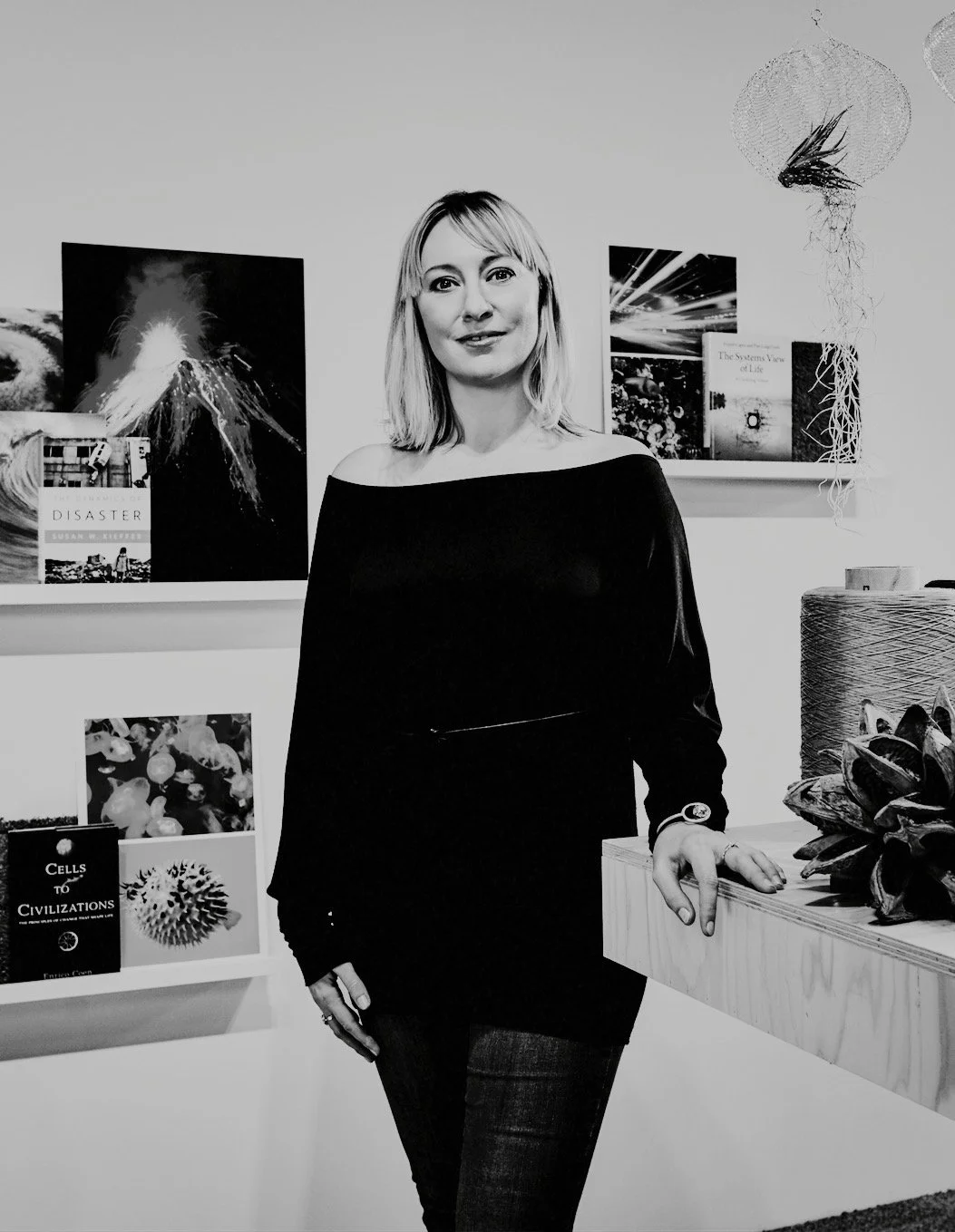
Feautred in Interface’s Beautiful Thinking campaign, in which she discussed how plants that evolved to live with wildfire, such as pines, could inspire new innovations for living with wildfire.
Invited to present Panarchistic Architecture in a masterclass atop The Monument in 2017, as part of the national commemoration of the 350th anniversary of the Great Fire of London, her wildfire design research has been published in the likes of the Routledge companions to Ecological Design Thinking(2022), and Smart Design Thinking in Archicture and Urbanism (2024), for which she authored the chapters on design for building wildfire resilience. Publications underway include a chapter on her work in bio-inspired sensing, processing, storage, and networks for building resilience to wildfire.
Dr. Sterry has led multiple enquiries into the potential of nature-informed, inspired, and enabled design, production, and innovation. She undertook her first exploration in the field between 1994 - 1995, when she created the seminal concept in biomaterial apparel for safe decomposition into the environment - biocompostable fashion, while still a design undergraduate. Between 2008–2010 she was founding director of award-winning interdisciplinary collaborative innovation programme New Frontiers, which provided opportunities and stimulus for new sustainable design, supported by 20 leading research institutions and professional bodies in chemistry, engineering, design, and construction and a committee of 30 foremost field experts. During that time she explored how fields including biomimetics, biotechnology, smart materials, and IOT networks could shape the future of the built environment.
A fellow of the Design Research Society and Institute of Science and Technology, chartered scientist with the Science Council, member of the Bureau of European Design Association’s MADres G42 group, of the Design Council expert network, and of the National Coalition of Independent Scholars, Dr. Sterry is also the founder of bio-innovation and bio-futures consultancy Bioratorium® (est. 2019), and of Bionic City® (est. 2010) – the first initaitive to explore ‘how nature would design a city’.
In 2020, Dr. Sterry launched Panarchic Codex® - a name which she originally coined for the building codes she authored for use of her bio-inspired design paradigm - to serve as her post-PhD research and publishing platform. Purpose-built, it hosts an extensive collection of her wildfire research work, including digital, print, film, and audio educational resources, speculative building codes, design concepts, field and lab notes, interviews, and public outreach materials that bring cutting-edge research into accessible, open-access formats. These and other digital resources, including her Substack, serve both academic and industry audiences, and communities looking to better understand and adapt to fire-prone environments.

Dr. Sterry presenting the closing keynote at the Understanding Risk Balkans Conference in Belgrade, Serbia, 2018, produced by the World Bank and the Global Facility for Disaster Reduction and Recovery [GFDRR].
Recognition of Dr. Sterry’s works include a dozen national and international awards for innovation, creativity, and enterprise, including the Woman Icon of the Year Award (overseas) in the International Inspirational Women Awards (2024) and the Mensa Education and Research Foundation International Award for enhancing intelligence that benefits society (2010). Recognised as a 40 over 40 ‘Women to Watch’ honouree, she was also listed among the Libertine 100—one hundred women with world-changing ideas, and inducted into the Global Women Inventors and Innovators Network ‘Hall of Fame’.
Dr. Sterry’s wider qualifications include a Postgraduate Certificate with Commendation in Innovation and Enterprise from Kingston Business School, Kingston University London (2009), and a Bachelor of Arts with Honours and Commendation for her final year thesis in Design Practice from the University of Salford, Greater Manchester (1996).
Concerned at the high levels of research plagiarism, intellectual property theft, and misappropriation in research in science, wider STEM, design, and innovation in and beyond the United Kingdom, Dr. Sterry recently cofounded the Original Minds, Rightful Credit campaign. Supported by a growing community of experts from fields including IP law, public relations, research, education, and communications, the campaign aims to raise awareness of these issues and their impacts to individuals, initiatives, disciplines, and wider society, and encourage meaningful interventions to push back against the problem.
Bringing together a rare confluence of scientific rigour, creative vision, deep ecological understanding, and entrepreneurial spirit, Dr. Sterry’s overaching aim is to continue to pioneer radical new pathways towards a future in which humanity coexists dynamically and sustainably with wildfire - and Earth’s wider biotic and abiotic systems. Her past and present works challenge conventional thinking, offering not only strategies for adapting our built environments, but also a broader cultural and philosophical reframing of our relationship with fire and the landscapes it shapes.
Find our more about her current and past works here.

Dr. Sterry presenting Panarchistic Architecture in a keynote at the Future of Architecture and Building conclave, held in Mumbai, India, March 2024.
Dr. Sterry has numerous affiliations with leading academic and research institutions in the fields of design, architecture, science, engineering, and innovation. Her past and present roles include visiting lecturer, critic, external examiner, thesis supervisor, peer-review, and assembly member at several distinguished research-led universities including among others, the world’s No.1 ranked architecture school - The Bartlett at University College London, Central Saint Martins and other colleges within University of the Arts London, AA School of Architecture, Ravensbourne, University of Innsbruck, and the Institute of Advanced Architecture of Catalonia (IaaC). A guest professor with Professors without Borders, she is also a member of Neil Spiller and Phil Watson’s EEL (extraordinary.experimental.laboratory).
She has contributed as a scientific committee member, peer-reviewer, editorial board member, finalists juror, evaluator, and guest curator to several leading scientific, sustainability, built environment, and design journals, conferences, societies, and awards worldwide, including Conservation X Labs Fire Grand Challenge (Washington), International Bionic Engineering conference (Boston), International Bioengineering congress (Izmir), Bio-calibrated symposium (London), and the Silbersalz Science & Media Awards (Berlin/Halle), among others. Dr. Sterry is published in over 60 international scientific, industry and consumer journals, magazines, books, reports, and white papers - as diverse as the Global Innovation Science Handbook (2014), for which she authored the chapter ‘Biomimetics: Learning from Life’ to commissioned features including cover stories for sustainable built environment trade journals to contributions to popular science and other non-fiction books.
Dr. Sterry has held numerous executive and non-executive roles to world-first startups and iniatives in sustainable innovation, design, and technology across her career. Her most recent responsibilities include serving on the executive advisory board to Full Grown - the world’s first commercial company to grow furniture in an orchard. Prior responsibilities include Head of Technology with one of the UK’s first sustainability-focused media production companies - creating films and media with peers inc. Prof. Rachel Armstrong, as well as roles leading business development, client relations, marketing, media, public relations, sponsorship, and event direction.
Further previous works include founding the multi-award-winning sustainability think tank and collaborative laboratory Societás [2004 - 2010]; and co-founding the world’s first online visual arts awards, the Creative Graduate Prize [2004-2010] and the Iconique Societás Awards [2007-2010] - both of which helped spotlight the world’s most exciting emerging talent in fields including fine art, installation, photography, and art direction.
Dr. Sterry was an expert reviewer of Conservation X Labs Fire Grand Challenge for Western North America 2024/5.

Melissa Sterry is founder of the Panarchistic Architecture paradigm — a seminal approach to designing built environments that not only survive, but thrive, in wildfire-prone regions. With a PhD from the Advanced Virtual and Technological Architecture Research (AVATAR) group at the School of Architecture and Landscape at University of Greenwich, London, her groundbreaking research explores how the biochemistries, behaviours, structures, and ecologies of fire-adapted species can inform resilient and regenerative architectural, urban, and landscape design, planning, and policy.
At the heart of Dr. Sterry’s work is a question central to our increasingly fire-prone future, ‘Can we learn to live with wildfire, not against it?’ Her answer, refined over more than a decade of rigorous transdisciplinary inquiry, is a resounding yes.
Synthesising knowledge from fields including fire ecology - and the wider fire sciences, bio-inspired design, engineering, materials, and systems theory, her Panarchistic Architecture model, advances biomimetics from individual organisms to whole ecosystems - ecomimesis. Inspired by insights from an extended stay in the fire-prone hills of San Diego County in 1997, during which she first learned of fire ecology, Dr. Sterry designed and funded her PhD research programme, which initiated in 2010 at University of Salford’s School of the Built Environment (SOBE), she completed under the supervision of Prof. Neil Spiller at Greenwich in 2018.
Supported by her wider research into building resilience to major meteorological geological, and ecological disruptions, this systems-led methodology proposes novel adaptive material and information systems that mimic the dynamics of pyrophytic (fire-adapted) flora and fauna. Designed to align with the severity, frequency, and behaviour of local fire regimes, these innovations present compelling possibilities for architecture, urban design, planning, and policymaking at a time when the risks posed by wildfires to those living and working in the wildland-urban-interface are rising rapidly.

Pictured at Mammoth Lakes, California in 1997, during the extended visit to the West Coast in which she first learned of fire ecology and collected specimens of pyrophytic species of genus including Pinus and Quercus. Several of her seminal bio-inspired design concepts in material and information systems for building resilience to and recovery from wildfires were inspired by those same specimens.
Since the completion of her PhD, Dr. Sterry has undertaken several field trips, including to the site that first inspired her bio-inspired design for living with wildfire research. She has further advanced both the paradigm itself and its applications, including the creation of sub-classes including Pyrophytic Architecture™ and Xerophytic Architecture™ - the former focused on wildfire, the latter on aridity and heat.
Working in collaboration with commercial partners, Dr. Sterry is also developing original design concepts which, turning pyrophytes into prototypes, she concieved during her PhD studies. Provisionally outlined in works including her thesis (2018), peer-reviewed chapters, and presentations, they include BIOroot™ System (subsurface hybridised data sensing, processing, actuating, and storage network that tracks environmental metrics including biotic moisture and atmospheric humidity levels); Pyri-CONE™ (autonomous wildfire sensing, processing, and actuating device that, mimicking a pinecone of the pyriscence variant - from which she coined its name, is activated by chemical, heat, and other environmental signatures of wildfires); and Retardant BIObark™ (exterior wall-plating system modelled on fire-retardant rhytidome, which dissipates heat from wildfires to help protect structures).
Currently, Dr. Sterry is developing Design for Wildfire school - a pioneering pop-up meets virtual education initiative offering interdisciplinary training in nature-inspired architectural, urban, and landscape design for building resilience to wildfire. Working with transatlantic partners, including leading research and education institutions, as well as laboratories and startups developing edge technologies in sensing, computing, materials, and engineering, the school will offer courses, field trips, and masterclasses, conduct collaborative research, and create conceptual showcases.
Through workshops, keynotes, and tailored consultations, she also helps organisations embed bio-inspired design and innovation, and wildfire and wider hazard resilience into their strategic frameworks, while offering ongoing opportunities for collaboration, research, and public engagement. Her past clients include the likes of the World Bank, Global Facility for Disaster Reduction and Recovery (GFDRR), Future Cities Catapult (Innovate UK), the Canadian Insitute of Planners, and the Future of Architecture and Building conclave.
biography &
biography &
background
background
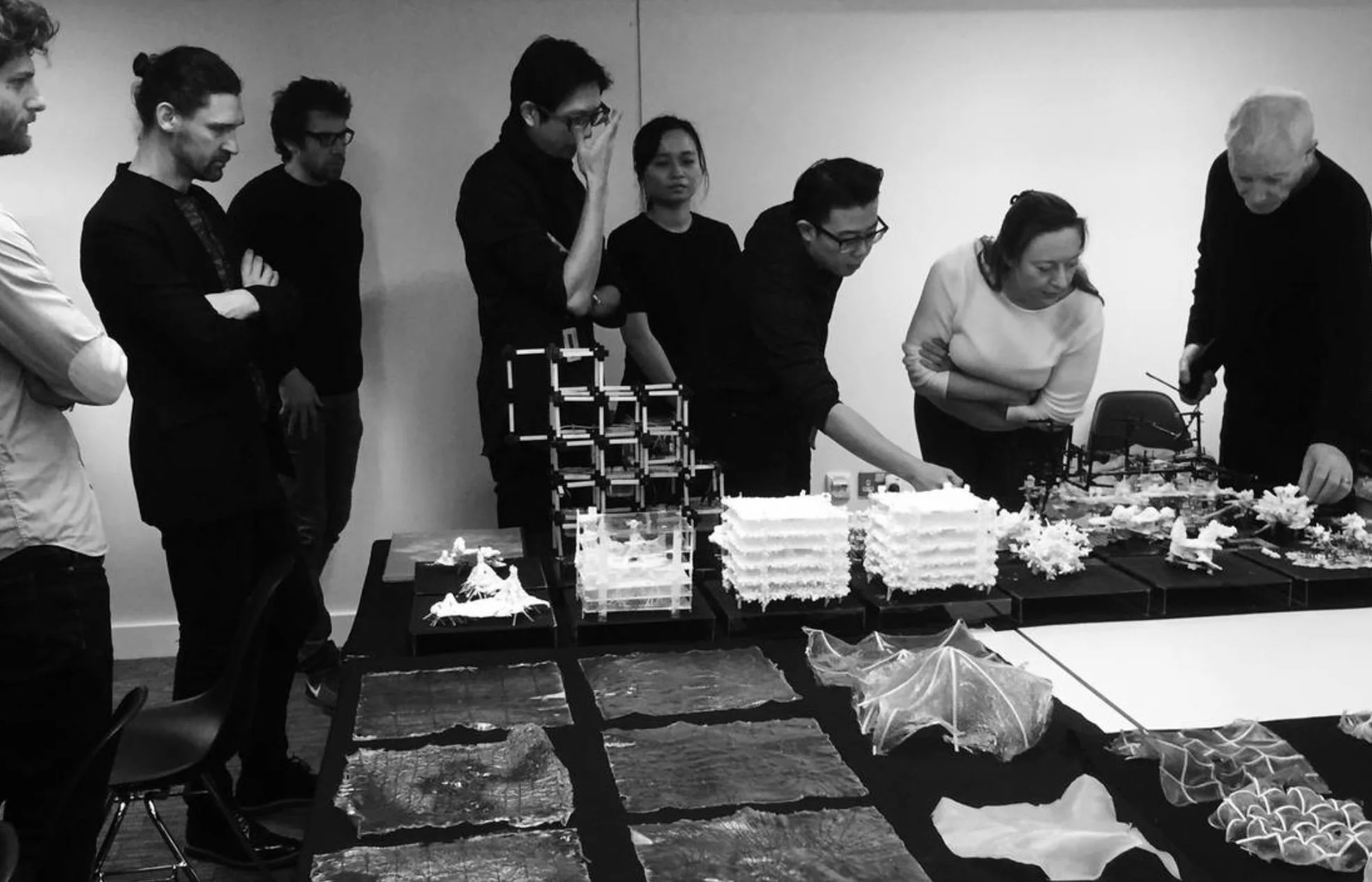
Dr. Sterry participating in a Masters crit session at The Bartlett, UCL, with peers including ecological architect Dr. Michael Weinstock, who was one of the examiners in her PhD viva, and ecoLogicStudio’s Dr. Marco Poletto.
Dr. Sterry’s influence extending beyond research and development, she is a trusted board-level advisor to both private and public sector leaders worldwide, helping them to navigate the complexities of sustainable innovation. Her strategic insights have been sought after by major corporations, government agencies, NGOs, and leading academic institutions, where she has informed forward-thinking programmes, policies and practices.
She has contributed as keynote speaker, panelist and/or panel chair at more than a hundred leading international conferences, seminars, festivals, awards ceremonies, and product launches in regions including Europe, Americas, Asia, and Oceania, for clients including World Bank, Unilever, McKinsey, Schneider Electric, Balfour Beatty, Manchester International Festival, Edinburgh International Science Festival, University of Oxford's Climate Forum, and University of Cambridge's Festival of Ideas, among many more. In 2024, 2025, and 2026, Dr. Sterry was consecutively voted one of the world’s Top 20 speakers shaping the future at board-level globally on the issue of sustainability in a poll of several hundred clients by the sector’s leading speaker agency.
One of the world’s most high profile futurists, she has further consulted to both executive-level private and public sector clients globally. Specialising in creating sustainable, resilient, circular, and regenerative futures in the built environment, utilities, manufacturing, engineering, design, publishing, media and communications, her past clients include among others Toyota Motor Corporation, Virgin group, Vodafone group, Grosvenor, and SUEZ group. She is ranked in the top 30 women futurists and top 100 most influential futurists worldwide in the Futurist Influence Rankings list.
Dr. Sterry has been interviewed by and/or had her work featured in 450+ international titles including Forbes, New Scientist, The Times, Business Insider, and Design Week, with cover stories in titles as diverse as The Guardian special edition ‘The Future Designed Around You’ and Mensa Magazine (Green Futures edition). She has participated as a media figurehead, commentator, and presenter in wide-ranging national and international productions for film, television, radio and internet, including podcast interviews with Neil deGrasse Tyson for StarTalk radio and Conversations with Mensa in the US; live and pre-recorded radio interviews and presenting with BBC Radio 4, Local BBC Radio, Sky News Radio, and Virgin Radio in the UK, and CBC radio in Canada; and given live and pre-recorded interviews for TV networks including France 24, Business Insider, NBC, and BBC, among others. At a conservative estimate, her combined nature-inspired and wider sustainable innovation works have reached an audience of between 150M - 300M worldwide.