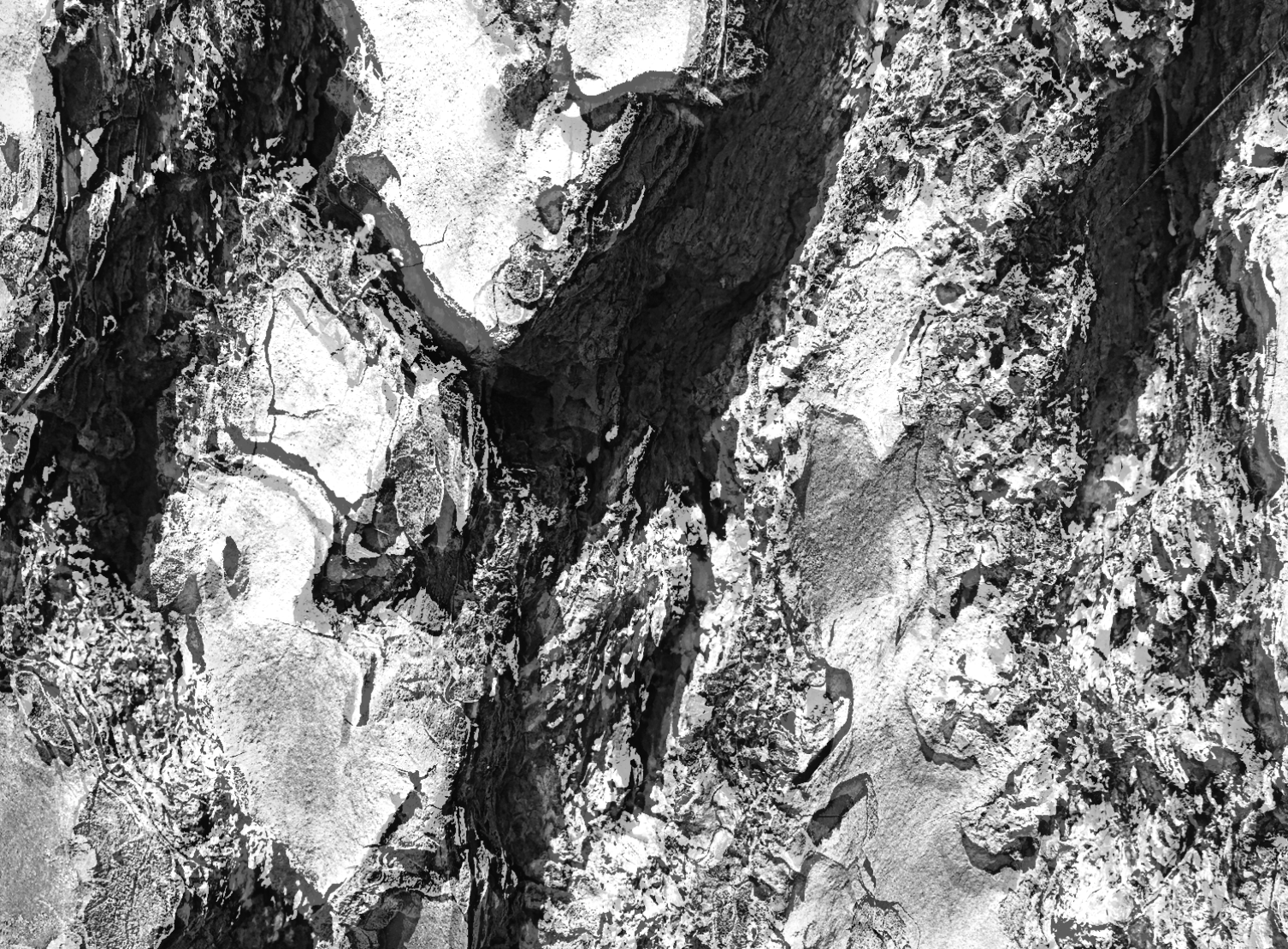
The Panarchic Codex [Tri-part Speculative WUI Building Codes]
Collectively known as the Panarchic Codex, the following building codes represent the convergence of insights drawn from multiple fields of scientific, philosophical, and design enquiry. Conceptually, these codes constitute three architectural Pyro Moirai [fire fates], each of which is materially, structurally, and informatically synced to its particular pyro-environment.
Panarchic Codex
California Code of Regulations 2030 Wildland Urban Interface
PARTS 1 – 3
Category: Low-rise Residential
Effective January 1, 2030
Preface
This document is Parts 1-3 of an unspecified number of parts of the California Code of Regulations 2030, also known as the Panarchic Codex. Applicable to occupants of low-rise residential properties in the Wildland Urban Interface in the State of California, these building regulations, or standards, have the force of law, and take effect 135 months after their publication.
Editio princeps

Table of Contents
Preface
Table of Contents
Glossary
Organisations
Effective Use
Safety Provisions
General Requirements
2
3
4
5
6
7
8
Part #1 : Pyro-evaders
9 - 11
Section 1: Data Network Architecture Section 2: Structural In-Situ Resistance Section 3: Regenerative Material Assemblies
Part #2: Pyro-endurers
12 - 14
Section 1: Data Network Architecture Section 2: Structural In-Situ Resistance Section 3: Regenerative Material Assemblies
Part #3: Pyro-resistors
15 - 17
Section 1: Data Network Architecture Section 2: Structural In-Situ Resistance Section 3: Regenerative Material Assemblies
Panarchic Oath
Disclaimer
18
19

Glossary
ArchiDNA: Architectural specifications, including structural design, material assemblage,
fixtures, and fittings which have been synthetically sequenced and stored in DNA.
ArchiDNA-cloning: The process of architectural replication enabled by Synthetic Subsurface Bio-Root Systems.
MaterialDNA: Material specifications, including molecular composition and properties including density and strength, which have been synthetically sequenced and stored in DNA.
Pyri-CONE: Synthetic Pyriscence-Dispersed-Seeds container-vessel, which releases its contents upon the melting of the Synthetic Serotinous Substance that affixes its external parts.
Pyro-Evaders: Architectures adapted to persist in mixed and high-severity fire regimes, including mixed-pine forests.
Pyro-Endurers: Architectures adapted to persist in low and mixed-severity fire regimes, including chaparral and oak forests.
Pyro-Resistors: Architectures adapted to persist in low and mixed-severity fire regimes, including Ponderosa pine forests.
Retardant Bio-Bark: Exterior wall-plating system, which modelled on fire-retardant rhytidome, features fissures and furrows of which the design dissipates heat. Materially, whether biologically or synthetically cultivated, its molecular structure, in combination with its horizontal thickness, insulate against low to mixed intensity wildfires.
Structural-Abscission System: Enabled by mechanical and/or morphological material response, a system that inhibits fire’s capacity to climb building exteriors by shedding of flammable parts. System activation may be seasonally cyclic and/or automated in response to wildfire’s presence.
Subsurface Shelter-in-Place: Below ground-level emergency shelter, which submerged to a depth sufficient to accommodate for no less than 1m width between ceiling and surface, is protected by a mineral-based re-enforced shell. Equipped with biosensors that register human habitation, upon use activates internal independent oxygen-supply and emits a signal to regional emergency services.
Surface-level DNAta-Storage System: Freestanding above ground DNA data storage system, which protected by Retardant Bio-Bark is external to buildings.
Synthetic Pyriscence-Dispersed-Seeds: ArchiDNA storage system, which transportable, may be distributed at multiple spatial-temporal scales. Dispersal processes include gravity, ballistic propulsion, and wind. System exhibits dormancy until chemical and/or heat- activated mechanisms release data in response to wildfire’s passing.
Synthetic Subsurface Bio-Root System: Subsurface ArchiDNA data storage and environmental sensing network that initiates architectural cloning upon the passing of wildfire. Embedded below building foundations, the system connects at the hyper-local to regional level, exchanging data between homes, businesses, and district hubs.
Synthetic Serotinous Substance: Synthetic resin that affixes the exterior parts of a Pyri-CONE. Upon its melting the cone initiates a mechanical response that that distributes its Synthetic Pyriscence-Dispersed-Seeds.
Organisations
Office of Wildland Urban Interface Living: A civic department dedicated to the provision of advisories and permissions, including planning, to residents of the Wildland Urban Interface. Amongst other projects, OWUI run the Mosaical Carbon-Based Materials Distribution Programme, which ensures that architectural and urban developments create appropriately spaced open-spaces, including public squares and parks, lakes and ponds, transportation routes, and sports fields, by means of limiting regional fuel- loads, and creating pockets of refuge during wildfires.
Office of Ethics and Environmental Governance: A civic department concerned with provision of tools, materials, and programmes which are designed to enhance citizen capacity to tackle social and environmental problems both within and beyond their community.
Office of Experimental Design Endeavours: A civic department that evaluates architectural, urban, and design experiments that may pose threat to the environment and/or human life.
Regional Landscape Ecology Office: A civic department that provides citizenry with open access to advisories on regional ecologies, including the role of biota in maintaining ecosystemic health and the many systems, including hydrology, as are reliant thereupon.
Synthetic DNA-Seed-Banks: Private and civic facilities that provide safe storage of synthetically-modified DNA by means of providing residents with insurance, and reassurance, that their biologically stored data, and all it facilities, is protected. National and/or local government-regulated entities, SDSBs also help in preventing against environmental contamination through accidental release of Synthetic Pyriscence-Dispersed, and other synthetically created DNA data storage seeds.
Effective Use
The Panarchic Codex, hereon referred to as “the codex”, is a model code designed in accordance with the principles of Panarchistic Architecture and its accompanying theorems. While accommodating of the processes of ecological and planetary systems more generally, its application is bespoke to low-rise residential buildings located amidst the low, mixed, and high-severity fire regimes of the State of California.
The codex incorporates concepts derived from fire-adapted plant genera of the variants Evader, Endurer, and Resistor, including the following functional traits:
Pyriscence
Pyrogermination
Abscission
Retardant rhytidome
Resprouting
Use of the codex requires prior familiarisation with fundamental facets of wildfire science, including fire frequencies, intensities, severities, and behaviours. Occupants unfamiliar therewith are required to contact the Regional Landscape Ecology Office for information on open access courses, publications, and events that are suited to their particular educational needs.
California’s wildland urban interface areas fall under one of three primary architectural classifications: Pyro-Evader, Pyro-Endurer, and Pyro-Resistor, together with variants thereof. Occupants need refer to the website of the Office of Wildland Urban Interface Living for clarification of the class unto which their zip code is ascribed.
Prior to submission of planning permissions, occupants and their representatives are required to take the Panarchic Oath, thereon submit a signed copy thereof to the Office of Ethics and Environmental Governance.
Safety Provisions
The following apply to all 3 pyro-persistent architectural types:
Provision of no less than one Subsurface Shelter-in-Place. Size to be proportionate to the property, and accommodate for the following:
All persons resident in the household.
All guests in-residence at any one time.
Plus, 3 or more others.
Subsurface Shelter-in-Place to be equipped with the following:
Independent lighting source [1].
Oxygen-supply-level sensor and warning alarm.
Drinking of no less than 2 litres per head.
First Aid Kit, including burns dressings and pain relief.
Prescription medications used by residents [2].
On and off-site DNA storage of the following documentation:
Passports and/or identity cards.
Marriage, Birth and Death certificates.
Household and other insurance documents.
Biological and synthetic in-grounds plantings to be appropriate to the local fire-regime:
Avoid use of invasive species, including non-native grasses.
Use Regional Landscape Ecology Office guidelines.
Seek independent expert advice on use of modified species.
[1] Extends to all non-toxic chemiluminescent and bioluminescent bio-lighting variants.
[2] Including, but not limited to, treatments for asthma and other respiratory diseases, diabetes, heart conditions, and mental health.
General Requirements
The following apply to all 3 pyro-persistent architectural types:
Both exterior and interior fabrication specifications require MaterialDNA properties to be selected to enable material redistribution that propagates ecological and/or architectural renewal processes upon the passing of wildfire.
MaterialDNA to be programmed to adapt to periodic changes to the historical fire regime, including shifts in frequency, intensity, level within the biomass strata, and behaviours more generally.
Post-fire architectural biofabrication processes, including recycling of burnt and damaged materials to occur within a radius of 3,000 hectares within areas classified as Wildland Urban Interface, Intermix, and Occluded.
Post-fire upcycling of burnt debris into architectural components, fittings, fixtures, furniture, and features is limited to that which has been collected within the property boundaries, the exception thereto being items which have been displaced by explosion, sediment transportation, and other events incurred in consequence of wildfire.
Residents that seek to integrate wildfire as production process for the creation and/or modification of architectural components, fittings, fixtures, furniture, and features need first obtain certified approval from the Office of Experimental Design Endeavours.
Residents are responsible for ensuring the safekeeping of remotely stored Synthetic Pyriscence-Dispersed-Seeds and their ArchiDNA and MaterialDNA contents. Storage via one of California’s approved Synthetic DNA-Seed-Banks is highly recommended.
Parts I, II, III
PYROEVADERS
Evolved to persist in WUI adjoining mixed and high-severity fire regimes, such as Yellowstone’s Lodgepole pine forests, pyro-evading architectures comprise functional traits selected to evade relatively infrequent, but high intensity fires.
Read here.
PYROENDURERS
Evolved to persist in WUI adjoining low and mixed-severity fire regimes, such as Californian chaparral and oak forests, pyro-enduring architectures comprise functional traits selected to endure frequent, but relatively low intensity fires.
Read here.
PYRORESISTORS
Evolved to persist in WUI adjoining low and mixed-severity fire regimes, such as California’s Ponderosa pine forests, pyro-resisting architectures comprise functional traits selected to resist frequent, but relatively low intensity fires.
Read here.

Panarchic Oath
I swear* that I will carry out, according to my ability and judgment, this oath and indenture, thus:
1. Seek understanding of the role of wildfire in ecological systems.
2. Periodically update my understanding through formal and other means.
3. Share that understanding with my peer-group and community.
4. Endeavour to maintain the integrity of regional ecological processes.
5. Contribute to local and/or regional wildfire monitoring programmes.
6. Remain alert to fire-weather advisories and evacuation notices.
7. Build by means of placing no undue risk on emergency services.
*Religious persons may swear to metaphysical entities of their choice.
Sign here:
Name: ………………………………………………………………………………………………
Organisation:……………………………………………………………………………………..
Address: …………………………………………………………………………………………..
Zip Code:…………………………………….State:……………………………………………
Signature:……………………………………………………………………………………………
Date:…………………………………………………………………………………………………...
Disclaimer
A speculative work, the products, services, concepts, organisations, and programmes cited within and of this document are entirely fictitious, their purpose that of illustrating near-future potentialities within architecture and urban design at the Wildland Urban Interface.
Continue to Part #1 Pyro-evaders here.
Citation: Sterry, M. L., (2018) Panarchistic Architecture: Building Wildland-Urban Interface Resilience to Wildfire through Design Thinking, Practice and Building Codes Modelled on Ecological Systems Theory. PhD Thesis, Advanced Virtual and Technological Architecture Research [AVATAR] group, University of Greenwich, London.