
Design for Wildfire talks
Melissa Sterry, PhD, CSci, FIScT, FDRS : Leading Expert in Biomimicry and Resilience for Wildfire
Melissa Sterry is a globally acclaimed ecological design scientist, complex systems theorist, biofuturist, and thought leader in sustainable innovation and urban resilience. The seminal research exploration in the field, she holds a PhD in designing resilience to major wildfires through the creation of complex adaptive architectural and urban systems that mimic, synthesise, and synchronise with the biochemistry, behaviours, and relationships of indigenous flora and fauna species in the low, mixed, and high-severity fire regimes of the western United States. She is a chartered scientist with the Science Council, a member of the Design Council expert network, and a recipient of multiple prestigious fellowships and other accolades including over a dozen national and international awards. With over two decades of experience at the intersection of science, design, and innovation, she has pioneered paradigms such as Panarchistic Architecture and Pyrophytic Architecture™, which apply systems thinking and nature-inspired design to tackle the challenges posed by wildfires. She has founded multiple award-winning sustainable design projects including Bionic City® [Est. 2010], which was the first initiative to explore how would nature design a city" with resilience to natural hazards and New Frontiers, which was one of the UK’s earliest sustainable design for the built environment programmes [2008 - 2010] and supported by over twenty of the UK’s leading scientific, engineering, and design institutions. Drawing on her extensive transdisciplinary expertise, Dr. Sterry’s talks offer transformative insights for professionals in architecture, urban planning, real estate, policymaking, insurance, and beyond.
Her Design for Wildfire talks can be booked individually or as a series, delivered online or in-person and in regions including the United States, Canada, Australia, United Kingdom, and Europe. In addition to the talks, organisations can enhance their engagement with tailored workshops on bio-inspired design for wildfire resilience, commission bespoke white papers and reports, and multimedia educational programs delivered through film, podcasts, and print. Whether you are looking to inform your leadership team, inspire your workforce, or educate stakeholders, Dr. Sterry’s talks are designed to spark actionable ideas and forward-thinking strategies. Find a selection of talk topics to choose from below.
From Megafires to Microhabitats
Designing resilience to extreme wildfires in an age of rapid environmental change
This talk delves into the intricate relationship between vast, destructive wildfires and the delicate ecosystems that depend on them for regeneration. Dr Melissa Sterry examines the causes and impacts of megafires, from their role in reshaping landscapes to their effects on biodiversity and human settlements. She highlights how adaptive design, inspired by nature’s resilience, can be harnessed to mitigate wildfire damage and facilitate faster, more effective recovery for affected ecosystems and communities. By exploring examples of microhabitats that thrive in fire-prone regions, this session provides attendees with actionable insights into designing landscapes, infrastructure, and systems that coexist harmoniously with the realities of wildfire dynamics.
Attendees will learn:
The ecological role of wildfires in shaping landscapes and biodiversity
How microhabitats adapt to and recover from fire events
Strategies for integrating fire-adaptive principles into urban and rural planning
Innovations in Fire-Smart Architecture
Designing homes with resilience to wildfires, floods, and other natural hazards
How can architects create homes that are not only fire-resilient but actively adapt to wildfire exposure? Dr Melissa Sterry presents groundbreaking biomimetic architectural solutions that incorporate passively fire retardant and self-repairing materials, regenerative urban and peri-urban landscapes, and adaptive architectural structures. This talk is essential for architects, developers, and policymakers tackling fire-prone housing challenges.
Attendees will learn:
The latest innovations in fire-smart building materials
How systems thinking can reduce fire risk around homes
Pioneering design strategies for creating wildfire-resilient housing
Future-Proofing Real Estate Against Wildfire
Harnessing nature’s adaptive strategies for sustainable property development
Dr Melissa Sterry explores how biomimicry can transform real estate, ensuring wildfire resilience in residential, commercial, and mixed-use developments. From fire-resistant materials to regenerative urban systems, she presents cutting-edge innovations that enhance the longevity and sustainability of real estate projects. Developers, architects, and investors will gain insights into nature-inspired solutions for future-proofing their properties.
Attendees will learn:
How biomimetic materials can enhance fire resistance and durability
Strategies for integrating self-sustaining systems into developments
The role of regenerative design in long-term property value
Bio-Inspired Fire-Resilient Construction
Revolutionising construction with biomimetic materials
The buildings of the future must endure extreme heat, drought, and fire. This talk explores cutting-edge biomimetic materials inspired by fire-resistant plants and organisms. Dr Melissa Sterry examines how these innovations can transform construction, providing sustainable alternatives to conventional materials while enhancing resilience to environmental threats.
Attendees will learn:
How biomimetic materials can improve fire resistance in buildings
The potential of self-repairing and heat-resistant construction solutions
The role of bioengineered materials in sustainable urban development
Biomimicry for Wildfire Resilience
Designing architectural, peri-urban, and urban wildfire resilience inspired by nature
Wildfires are an escalating global threat, yet nature thrives in fire-prone ecosystems through remarkable adaptations. Dr Melissa Sterry, field founder of bio-inspired design for building architectural, peri-urban, and urban resilience to wildfire, explores how biomimicry can inform the design of fire-resilient buildings and infrastructure. Drawing from her extensive research in the field, this talk showcases her pioneering strategies inspired by species and ecosystems that evolved to live with fire. Ideal for those seeking insights into creating resilient systems that coexist with wildfire dynamics.
Attendees will learn:
How nature’s adaptations can inform wildfire-resilient architecture
The role of biomimicry in urban and peri-urban fire mitigation
Innovative materials and technologies for fire-adaptive design
Systems Thinking for Fire-Resilient Futures
Holistic design approaches for building wildfire-adapted communities
Building on her Panarchistic Architecture framework, Dr Sterry introduces a systems-based approach to designing resilient residential communities. This talk explores how interconnected systems — such as urban planning, material science, and emergency management — can mimic nature’s ability to adapt to disturbances like wildfires. Attendees will learn how to integrate resilience into multiple aspects of the built environment, ensuring long-term sustainability and safety.
Attendees will learn:
How systems thinking enhances wildfire resilience
The role of interconnected urban systems in mitigating fire risks
Strategies for designing communities that recover and regenerate after wildfires
Lessons from Fire-Adapted Ecosystems
Nature-inspired solutions for wildfire preparedness and recovery
Fire-adapted ecosystems offer a wealth of insights for building resilience to wildfires. Dr Melissa Sterry examines biological systems, such as pyrophytic plants and self-recovering landscapes, and translates their principles into actionable strategies for architecture, urban planning, and emergency response. This session equips attendees with tools to design systems that anticipate, withstand, and recover from wildfire impacts.
Attendees will learn:
How pyrophytic species adapt to and recover from fire
Ways to incorporate fire-resilient design into buildings and landscapes
The role of biomimicry in emergency preparedness and disaster recovery
Building Resilience in Fire-Prone Environments
Adaptive design approaches for living with wildfire
Drawing on her Pyrophytic Architecture™, Dr Melissa Sterry demonstrates how to design structures, and peri-urban and urban infrastructure systems that not only survive wildfires but thrive in their aftermath. This talk presents how buildings and landscapes can be designed to adapt, recover, and regenerate after fire events, using principles from fire-adapted ecosystems. Ideal for architects, planners, and policymakers, this session provides a visionary approach to wildfire resilience.
Attendees will learn:
How Pyrophytic Architecture™ enables built environments to adapt to wildfires
The role of fire-resistant materials and spatial planning in fire-prone areas
Strategies for integrating regenerative design for post-fire recovery
Fire Ecology Meets Urban Design
Integrating Pyrophytic principles into resilient cities
This talk bridges fire ecology with urban design to address the growing risks of wildfires in urban and peri-urban areas. Dr Melissa Sterry explores how principles from fire-adapted ecosystems can inform city planning, building regulations, and policy, from creating natural firebreaks to strategic site selection to regenerative recovery protocols. She presents innovative design approaches for integrating wildfire resilience into urban systems, making this session invaluable for urban planners, architects, and policymakers.
Attendees will learn:
How fire-adapted ecosystems can inform urban planning and policy
Strategies for integrating natural firebreaks into city design
Best practices for regenerative recovery after wildfire events
Designing Fire-Resistant and Sustainable Spaces
Resilient design for interiors in wildfire-prone places
Interior spaces must evolve to withstand climate-related risks, including wildfire, aridity, and extreme heat. Dr Melissa Sterry presents pioneering design strategies for fire-resilient interiors, featuring biomimetic materials, self-repairing features, and sustainable design principles. This talk is ideal for interior designers, furniture makers, and property developers seeking innovative, climate-responsive and deeply sustainable solutions.
Attendees will learn:
How biomimetic materials can enhance fire resistance in interiors
The benefits of regenerative design for long-term sustainability
Ways to integrate resilience into interior design without compromising aesthetics
Designing Regenerative Post-Fire Landscapes
From devastation to renewal: nature-inspired recovery strategies
Wildfires can devastate communities, but nature demonstrates how recovery can be regenerative. Dr Sterry explores strategies for designing post-fire landscapes that rebuild biodiversity and enhance long-term urban and peri-urban resilience. Drawing from her pioneering work in biomimicry and regenerative design, she offers insights into how communities can rebuild stronger and more sustainably after wildfire events.
Attendees will learn:
How fire-adapted ecosystems regenerate after wildfires
Strategies for designing wildfire resilient landscapes
Ways to mimic nature’s regenerative processes
Find details of Dr. Sterry’s Los Angeles wildfire rebuild and recovery talks here.
Whether you're in architecture, urban planning, policymaking, insurance, or real estate, Dr. Sterry's talks empower your teams to develop innovative, nature-inspired wildfire solutions. Her engaging presentations combine her extensive academic credentials, groundbreaking research, and practical applications, tailored to inspire fresh perspectives and future-fit strategies. Delivered in a format that suits your organisation — whether a single session, series, or complemented by workshops — these talks foster resilience, sustainability, and forward-thinking innovation.
If you’d like to explore booking Dr. Melissa Sterry to give a talk, get in touch here or through Linkedin.
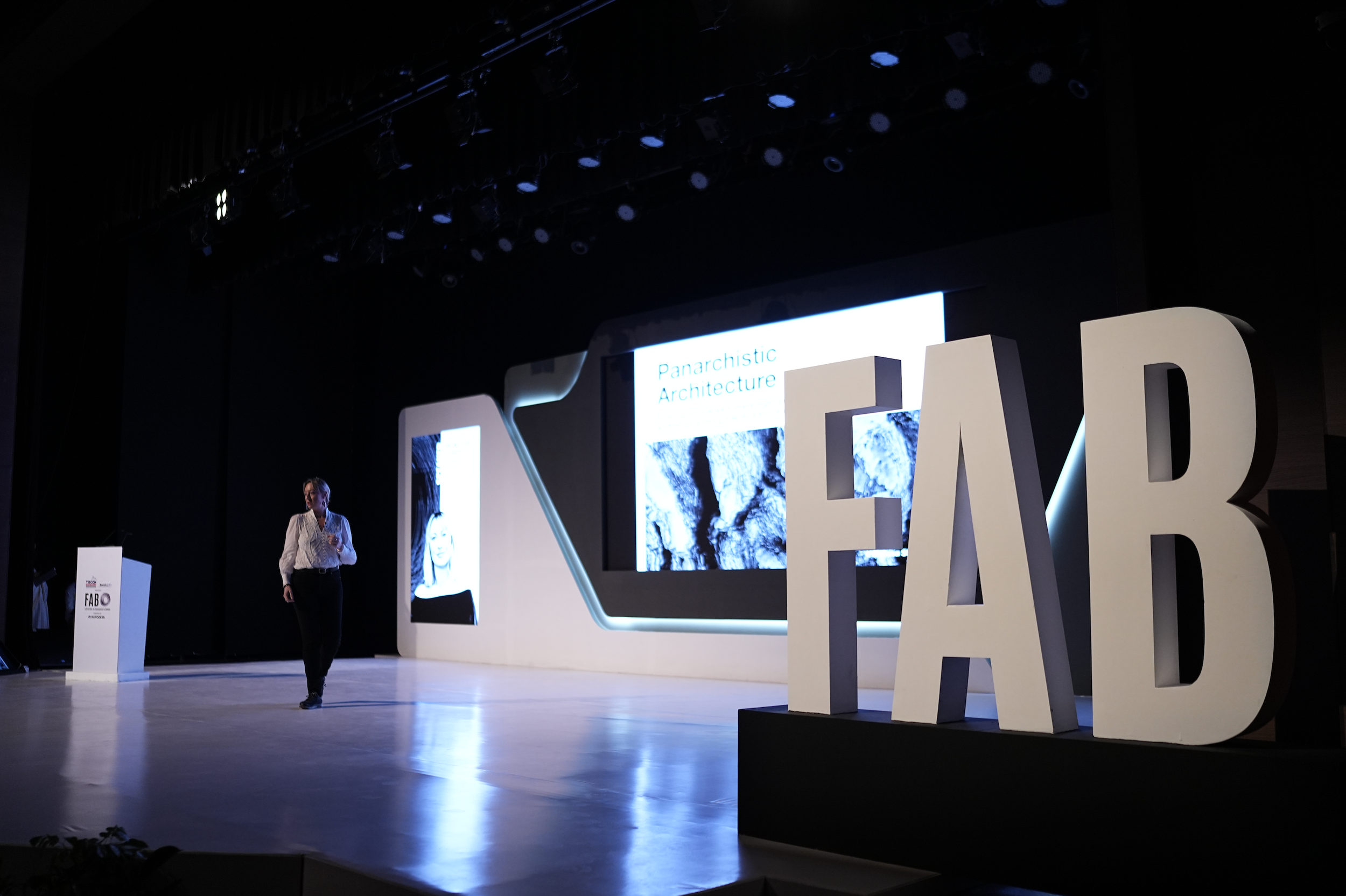
Images: [Top] Retardant BIObark™, Melissa Sterry © [Above] Dr. Sterry’s Panarchistic Architecture presentation at Future of Architecture and Buillding [FAB] conclave, Mumbai 2024.