Concepts
Seminal constructs in architectural and urban resilience to wildfire modelled on functional traits of species that have evolved to live with wildfire.
An exothermic oxidation reaction, fire forms in the presence of three components: oxygen, heat, and fuel: the fire triangle. Until recently, the advent of the combustible carbons better known as terrestrial plants had been dated to the Silurian, some 420 million years ago. However, a study on plant genetics published in 2018 by researchers at the University of Bristol’s School of Earth Sciences pushed that date back by as much as 100 million years (Morris et al). Whensoever they first emerged, fossil evidence suggests that some 428 - 359 million years ago, terrestrial plants rapidly diversified in an event called the Devonian explosion. In that period plants radically altered myriad aspects of the Earth’s systems, including its atmospheric composition - through processes including oxygenation and carbon fixation through photosynthesis; and its water cycle and climate - through processes including osmosis and transpiration. However, terrestrial plants also catalysed new Earth systems phenomenon, including both the creation of the pedosphere - the layer of mineral/organic rich matter better known as soils; and the advent of fire through the creation of the combustible matter that would complete the fire triangle. Put more simply, terrestrial plants created new levels of complexity in the Earth’s systems.
Since their arrival in some ancient epoch, terrestrial plants have evolved in symbiosis with Earth’s systems in a way that’s so intimately bound as to be akin to the entanglement between space and time. Though aspects of these relations were anticipated by scientists of past, only with the emergence of recent technologies are we able to see the evidence with our own eyes, and in a way that’s empirically testable. While many are the implications of recent scientific discoveries, perhaps the most profound concern how we protect biodiversity and its many benefits. Evidence to support that statement may be found in how we relate to that most subjective of constructs that is commonly called ‘Nature’. For example, in the minds of some, protecting the natural world involves conserving its material state (i.e. keeping things how they are, where they), thus embracing ideas that revolve around notions of order and stasis. Within this mindset, mitigating environmental threats is reduced to a numbers game (i.e. how many trees we plant). However, if the history of Life on Earth tells us anything it’s that species, genus, and entire taxonomic lineages survive not through resisting change, but embracing it - the process that we call Evolution.
Pyrophytic Architecture™
*
Pyrophytic Architecture™ *
Prevalence of wildfire pulses across epochal time like a planetary heartbeat. But, whereas in humans it’s the nervous system that sets the pace, historically, the frequency and other key variables of wildfire have principally been controlled by plants, and more specifically by the extent to which they produce oxygen. Fierce as today’s wildfires may seem, they are tame compared to those that raged during periods when atmospheric oxygen levels were significantly higher than today, such as in the Late Carboniferous when oxygen made up an estimated 35% of the gaseous composition of Earth’s air, whereas today it makes up just 21%. In this period two of the three elements of the fire triangle were in great abundance, the other being fuel in the form of the plants that were producing all that oxygen. Over the course of deep time two elements wrestle for planetary dominance: water and fire. During Ice ages its the former in its frozen form that most influences Earth systems, during Fire ages vice versa. In both instances, the elemental forces shape the planet’s landscapes at multiple scales and speeds.
Change is a constant in the entanglement between the living and non-living systems of Earth. Every moment at every scale - from the atomic to the universal, the relations between the two are shifting. In some instances, these shifts are cyclical, as occurs in the Carbon Cycle. In others, it seems, shifts are sporadic. In ancient times these variances were attributed to supernatural forces - the work of Gods no less. Whereas modern-day science illuminates causes and effects being shaped by laws - by phenomena that consistently occur in the presence of particular conditions. The study that underpinned the development of the seminal paradigm as presented on this platform involved researching the laws that influence a class of plants called pyrophytes, which are plants that evolved to live with wildfire. Their name derived from the Greek words “pyros”, meaning fire, and “phytos” meaning plant, though the matter that fossil evidence remains highly fragmented, thus their origins still shrouded in mystery, given that the fossilised remnants of wildfire, which are known as fusain, are found in abundance in Carboniferous [358.9 (+/- 0.4) - 298.9 (+/- 0.15) mya] coals and sediments, it is likely that proto-pyrophytes propagated during that period. While many of the plants that evolved during the Carboniferous are today extinct, some remain familiar to many, including gymnosperms (seed-bearing plants), such as members of the taxonomic division Coniferophyta (conifers). Then, as now, you’ll find members of this group in many fire-prone regions of the world, with examples including many species of firs and pines.
Melissa Sterry
〰️
Melissa Sterry 〰️

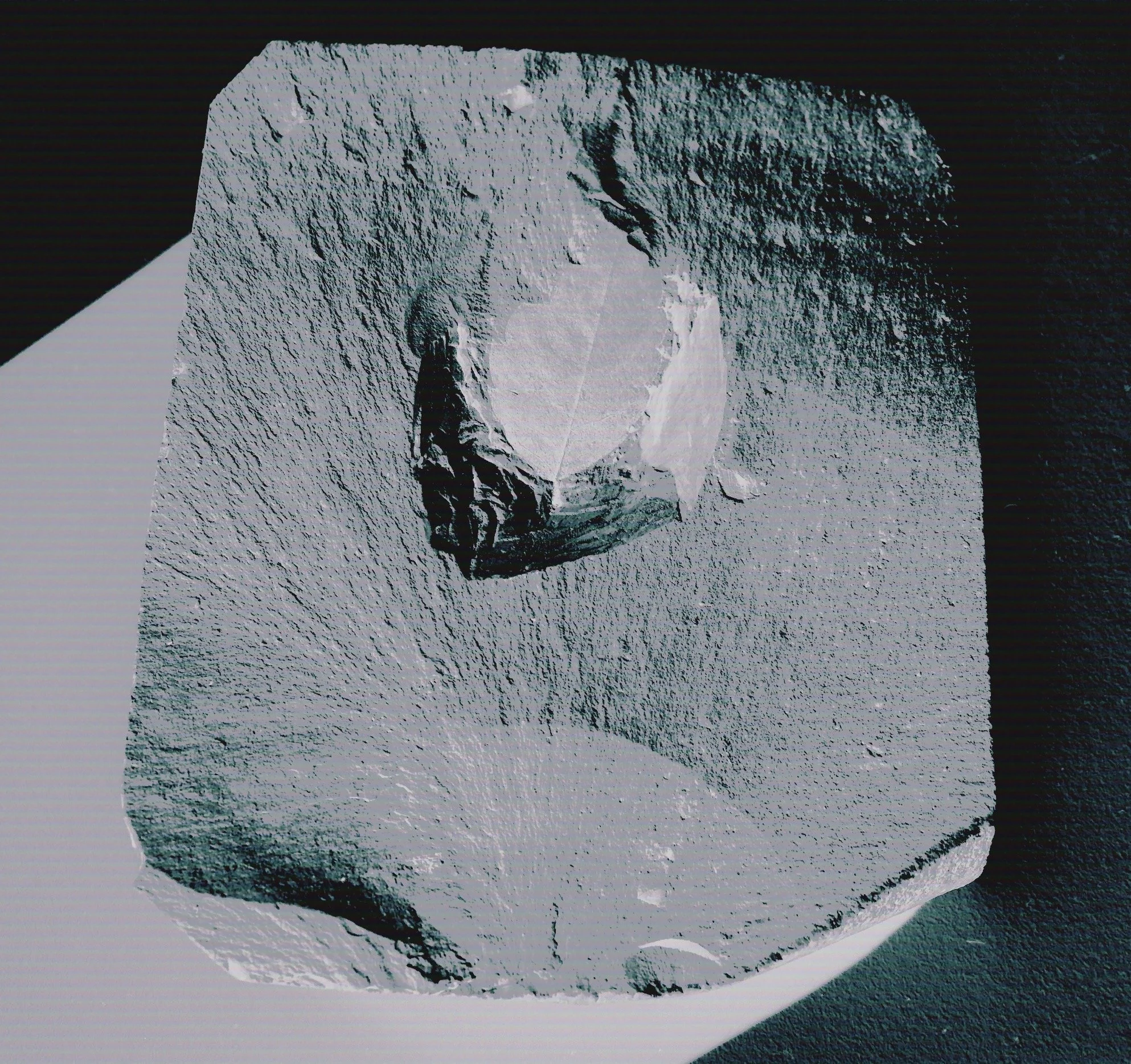
Numerous studies suggesting that Earth is entering a new Fire Age during which wildfire will become far more prevalent than since prior to the advent of civilisation, some suggest we avoid building in and adjacent to the many fire-prone places of the world. However, the premise of the paradigm this platform presents is that wildfires being far from the only hazard from which many will likely flee, others including sea level rises, wars, and more, it’s untenable that humanity can and will ubiquitously abandon building in fire-prone places, thus we need to explore how we might learn to live with wildfires by mimicking how pyrophytes already have.
Pyrophytes as Prototypes
The evolutionary entanglement between pyrophytes and wildfires - the fact that the former shape the frequencies, intensities, behaviours, and thus environmental impacts of the latter, and the latter shapes the functional traits, population density, and distribution of the former - necessitates that any concept of which the intent is that of integration into fire-prone landscapes needs to be bespoke to its fire regime (expression of wildfire in the place) and the particular pyrophytes that populate it. Consequently, the over-arching wildland-urban interface resilience paradigm as presented here proposes not a single set of architectural and urban design approaches, methods, and codes, but several: not a ‘bio’ diversity, but an archidiversity’, in which pyrophytes serve as prototypes. Within this construct, which was first fully iterated in Panarchistic Architecture: Building Wildland-Urban Interface Resilience to Wildfire through Design Thinking, Practice and Building Codes Modelled on Ecological Systems Theory (2018), and partially in earlier publications and presentations, building wildland-urban-interface resilience to both wildfires and other classes of natural hazards involves the development of a system akin to a taxonomic hierarchy populated by architecture and urban design concepts that fall within domains, kingdoms, phylums, classes, orders, families, genus, species, and sub-species. Put more simply, a family tree of architecture.
As in the Kingdoms of Life, the members of this architectural hierarchy are ever-evolving, thus understood not as material objects, but as processes that involve the exchange of information and material over space and time. Within this construct architecture is the taxonomic ‘domain’, Panarchistic Architecture is the ‘kingdom’, Extremophytic Architecture™ is the ‘phylum’, Pyrophytic Architecture™ is the ‘class’, and concepts are in turn categorised by ‘order’, ‘family’, ‘genus’, and ‘species’. As in ecosystems of the biological kind, whether made up of residential or commercial properties, or a hybrid thereof, any given extremophytic settlement (a place where buildings are built to coexist with natural hazards) is populated by architectural species that feature traits that mimic the biochemistries, behaviours, structures, relationships and systems of local extremophytes (species that have evolved to live with extreme natural hazards), this being a concept first explored in a series of essays published as part of the Bionic City® project (2009 - 2019), which asked ‘how would Nature design a city’ resilient to natural hazard events. Designing architectures that serve as an integral process of fire regimes, and in a way that promotes virtuous not vicious circles involves not merely working across diverse disciplines, but undertaking such depth and breadth of research as can successfully mitigate the still many knowledge gaps that exist, and in doing so come as close to creating a panacea as possible.
As in the natural world, creating evolutionary processes involves selection - natural selection, and selection involves compromise. The dominant architectural schools of thought of both the Global North and South of now centuries have placed a high value on material conservation and constancy. Historically, and for as long as we have archaeological, written, and other records, indigenous and vernacular architectures have integrated features that help to mitigate local environmental threats in passive, renewable, and generally sustainable ways, of which two examples include the stilted villages of South East Asia and the built-to-burn wickiups of the South West Coast of America. Over many generations our ancestors observed the many cycles of the places they inhabited and came up with solutions that enabled them to not only live with fire, floods, aridity, storms, and more, but in a way that was in sync with local ecologies. But, somewhere along the line much of their architectural knowledge was discarded, as was the ecological and wider environmental literacy that underpinned it. However, neither Panarchistic Architecture nor its several phylums, propose to simply replicate ancient architectural concepts, because for all their many attributes their applications are arguably limited due to the matter that for many it is both impractical and/or undesirable to live and work in buildings of typologies that emerged before the likes of modern-day utilities existed.
Panarchistic Architecture (Ibid.) presented the theoretical framework for designing structures which, synced to the fire regimes of the sites they inhabit, work in symbiosis with local pyrophytes and the complex assemblies they form. A series of tools were created, including building codes, a practice oath, a series of seminal architectural features and components, scenarios, fictions, and other short stories, were integrated into the work by means of enabling architects, urban designers, planners, policymakers, and other built environment practitioners to explore the practical implications of the paradigm. Constituting a succinct summary of the outputs of research undertaken in the decade preceding the publication, these works continue to serve as a general introduction to the research and practice of the paradigm and its conceptual tenets. However, the task of designing to live with wildfire and in turn with the hazards with which it is intimately connected is ongoing, and not least because significant new discoveries, insights, and with them, risks and opportunities are emerging apace. In 2009, Sir John Beddington, spoke of a confluence of environmental and social challenges he called ‘the perfect storm’. Integrating pyrophyte traits including among others pyriscence, pyrogermination, abscission, retardant rhytidome, and resprouting*, the concepts as listed below are conceived to enable architectures to co-exist with variants of ‘the perfect fire storm’ at the advent of a new ‘Fire Age’.
Pyrophytic Architectural Genus
-
Pyro-Evaders
Evolved to persist in wildland-urban-interface adjoining mixed and high-severity fire regimes, such as Yellowstone’s Lodgepole pine forests, pyro-evading architectures comprise functional traits selected to evade relatively infrequent, but high intensity wildfires.
-
Pyro-Endurers
Evolved to persist in wildland-urban-interface adjoining low and mixed-severity fire regimes, such as Californian chaparral and oak forests, pyro-enduring architectures comprise functional traits selected to endure frequent, but relatively low intensity wildfires.
-
Pyro-Resistors
Evolved to persist in wildland-urban-interface adjoining low and mixed-severity fire regimes, such as California’s Ponderosa pine forests, pyro-resisting architectures comprise functional traits selected to resist frequent, but relatively low intensity wildfires.
Pyroachetypal Components
-
BIOroot™ System
Subsurface hybridised data sensing, processing, actuating, and storage network tracking biotic moisture levels, atmospheric humidity, below and above surface chemical and heat signatures, and other environmental information that is imperative to informing wildfire resilience and recovery actions.

-
Pyri-CONE™
Autonomous information sensing, processing, and actuating component integrating an analogue ballistic propulsion system which distributes architectural and urban design, engineering, and construction data upon activation by chemical, heat, and other environmental signatures of wildfires.
-
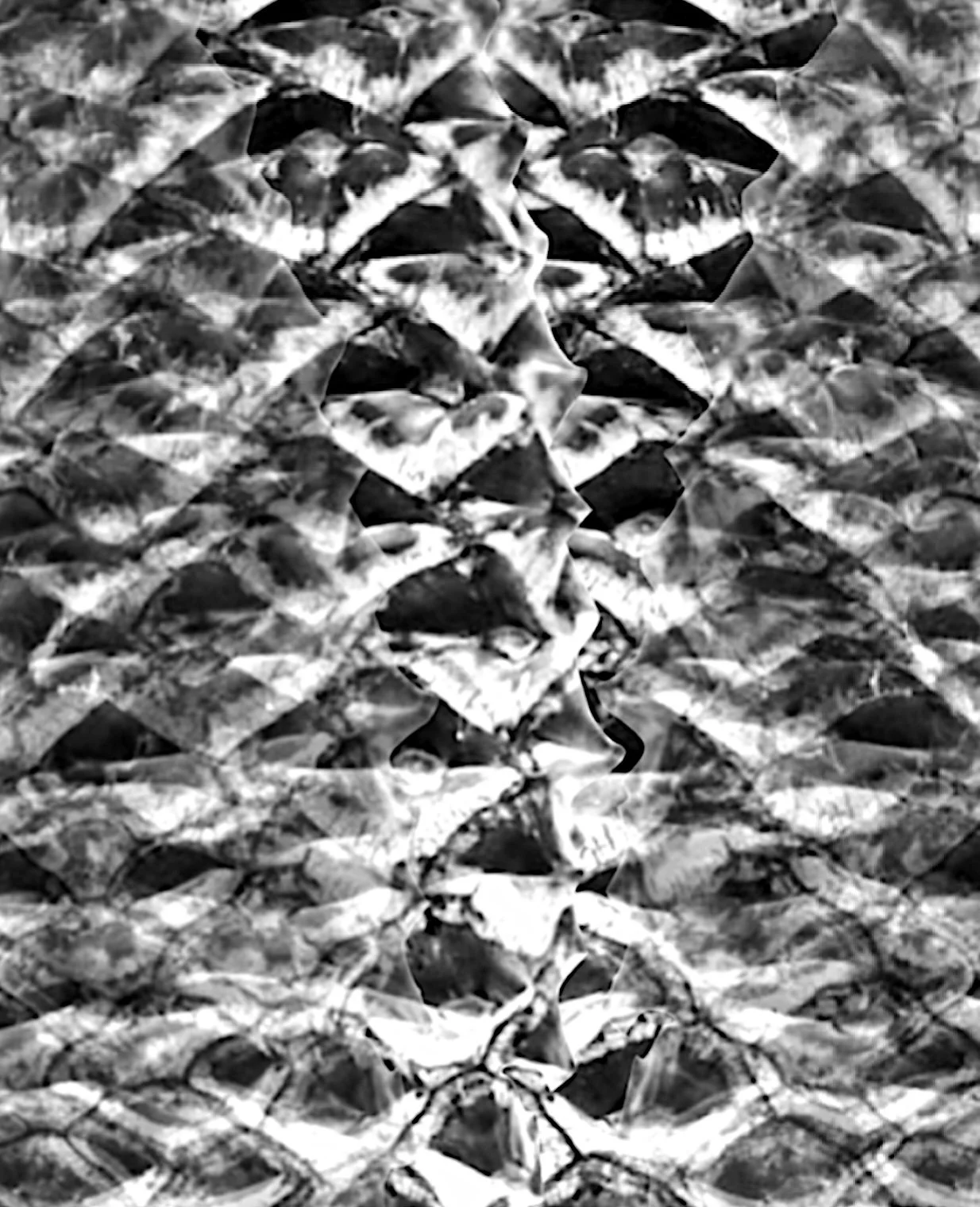
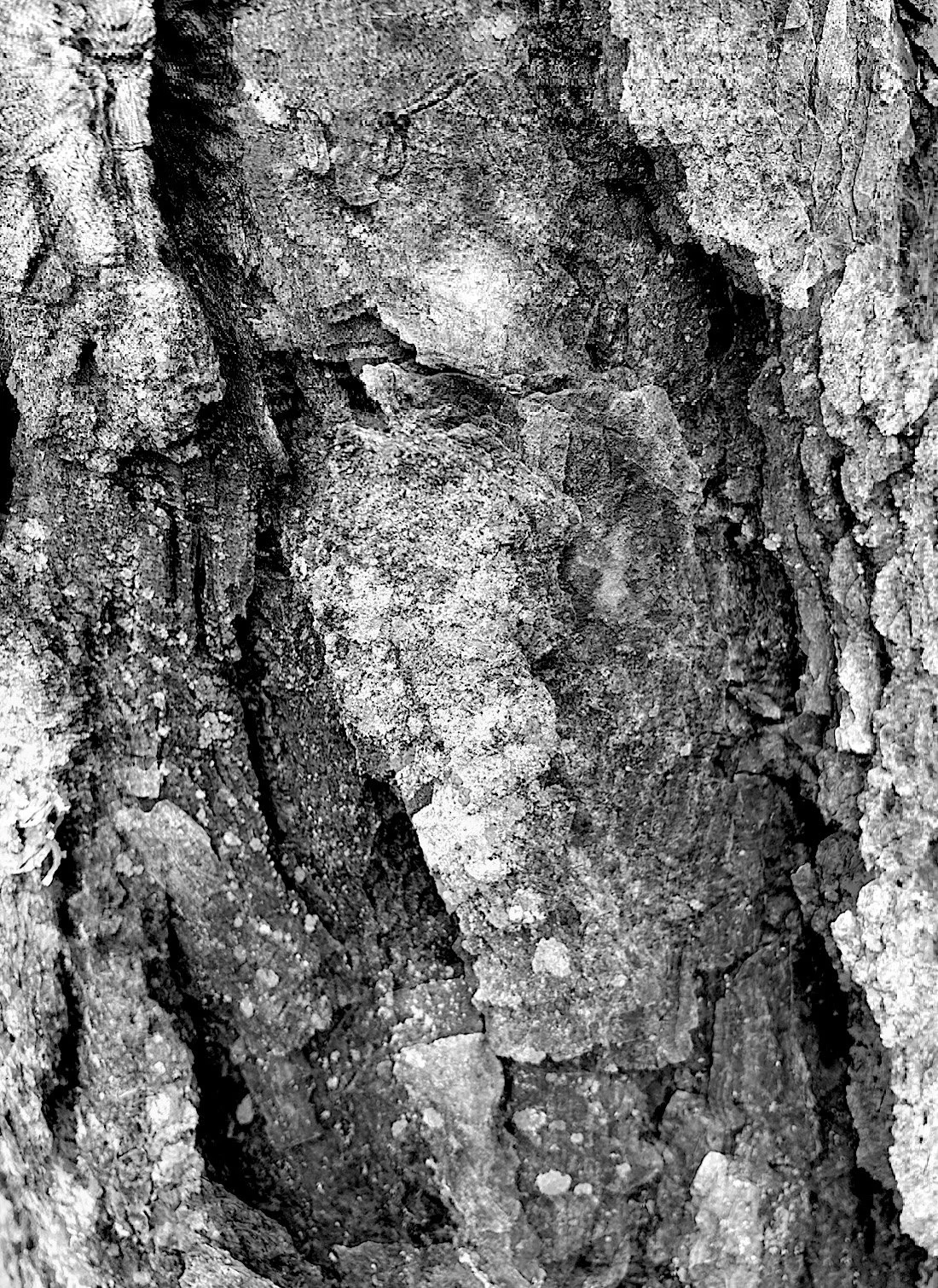
Retardant BIObark™
Exterior wall-plating system, which modelled on fire-retardant rhytidome, features tissues and furrows of which the design dissipates heat. Materially, whether biologically or synthetically cultivated, its molecular structure, in combination with its horizontal thickness, insulate against low to mixed intensity wildfires.

ArchiDNA™
Architectural specifications, including structural design, material assemblage, fixtures, and fittings which have been synthetically sequenced and stored in DNA.
ArchiDNA-cloning
Process of architectural replication enabled by synthetic subsurface BIOroot™ System.
MaterialDNA
Material specifications, including molecular composition and properties including density and strength, which have been synthetically sequenced and stored in DNA.
Structural-Abscission System™
Enabled by mechanical and/or morphological material response, a system that inhibits fire’s capacity to climb building exteriors by shedding of flammable parts. System activation may be seasonally cyclic and/or automated in response to wildfire’s presence.
Subsurface Shelter
Sub-surface shelter protected by a mineral-based re-enforced shell. Equipped with biosensors that register habitation and upon use activate independent oxygen-supply and emit a signal to regional emergency services.
Surface-level DNAta-Storage System™
Freestanding above ground DNA data storage system, which protected by Retardant BIObark™ is external to buildings.
Synthetic Pyriscence-Dispersed-Seeds
ArchiDNA™ storage system, which transportable, may be distributed at multiple spatial-temporal scales. Dispersal processes include gravity, ballistic propulsion, and wind. System exhibits dormancy until chemical and/or heat- activated mechanisms release data in response to wildfire’s passing.
Synthetic Serotinous Substance
Synthetic resin that affixes the exterior parts of a Pyri-CONE™. Upon its melting the cone initiates a mechanical response that that distributes its Synthetic Pyriscence-Dispersed-Seeds.
Synthetic DNA-Seed Bank
Storage facility for synthetically-modified DNA containing architectural and urban design blueprints and other data critical to post-fire rebuilding activities.
Designing architecture that works with, not against the life cycles of plants that have evolved to live with wildfire.
If you would like to learn more about how the mimicry of pyrophytes may herald a new age in architectural and urban resilience to wildfires read more, open access, in the thesis, ebooks, pamphlets, and essays. Alternatively, if you’d like to understand the concept in greater scientific, technical, and/or creative detail, get in touch to book a talk, masterclass, workshop, or other activity in which you can learn more.


References
Morris, J. L., et al. (2018) ‘Timescale of early land plant evolution’ in Proceedings of the National Academy of Sciences USA.
Sterry, M. L. (2018) ‘Panarchistic Architecture: Building Wildland-Urban Interface Resilience to Wildfire through Design Thinking, Practice and Building Codes Modelled on Ecological Systems Theory’, PhD thesis, Advanced Virtual and Technological Architecture research group [AVATAR], University of Greenwich, London.
Citation
Sterry, M. L (2024) ‘Pyrophytic Architecture™: Seminal constructs in architectural and urban resilience to wildfire modelled on functional traits of species that have evolved to live with wildfire.’ on PanarchicCodex.com
Images
Melissa Sterry © (2018 - 2024) Selection of images of seminal Panarchistic and Pyrophytic architectural concepts.