
Building a (B)IOT™
Biological Internet of Things:
Biomimicry IOT solutions for wildfire resilience
An AI generated translation of Dr. Melissa Sterry’s Codification for Eternal States of Flow, Flux, and Fire’ (2018) for the general reader.
Edge (bio)Computing for a New Fire Age
In a world increasingly defined by environmental unpredictability, humanity is turning to nature for new ideas. Among the most urgent challenges is learning to how to coexist with wildfire in fire-prone areas, particularly at the wildland-urban interface (WUI), where human developments meet untamed landscapes. Dr. Melissa Sterry’s research explores an innovative framework that combines architecture, ecological insights, and advanced electronic and biological technologies to create resilient urban environments. This approach is designed to serve as a beacon of hope in an age of climatic and wider environmental uncertainty.
Bespoke Biotechnological Resilience
Traditional approaches to planning and architecture often aim to provide universal solutions. Philosopher Jeremy Bentham envisioned a "single code" to address all societal needs. However, the complexities of natural systems, particularly fire-prone ecosystems, defy such simplicity. Sterry’s research proposes a three-part framework tailored to diverse environmental conditions and fire behaviours - an ‘ecosystem of architectures’ populated by a diversity of architectural and urban ‘genus’ and ‘species’.
This model leverages advancements in environmental monitoring and data analysis. Modern tools, from satellite imagery to artificial intelligence, provide unparalleled insights into wildfire dynamics. Organisations like NASA and the European Space Agency offer open-access satellite data to track active fires, assess vegetation health, and predict potential wildfire hotspots. When combined with cutting-edge tools like wireless sensor networks and citizen-generated data, this information helps develop a nuanced understanding of fire-prone regions.
Biological Sensors and Networks
Nature has been adapting to fire for millennia. Fire-adapted plants and interconnected fungal networks demonstrate how ecosystems persist and thrive despite environmental challenges. Trees and fungi, for example, communicate through vast underground networks, sharing information about threats such as drought or pests. This natural "internet" of the forest provides valuable lessons for designing human systems.
Unlike humans, who currently rely on centralised computing for decision-making, plants process environmental data in a decentralised manner. They respond to stimuli like light, temperature, and humidity with remarkable precision. These adaptive strategies can inspire architects, designers, planners, and technologies to radically rethink how buildings and cities could function in fire-prone regions.
Ecological Data Systems Thinking
The concept of "smart cities" has gained traction in urban planning. However, many current designs rely heavily on technology that could fail under extreme conditions such as wildfires. Sterry’s vision embraces a different kind of intelligence — one modelled after the distributed, resilient systems found in nature. Imagine buildings that respond to environmental changes as trees do. For example, during a wildfire, a bio-inspired network of sensors, including biological sensors, gathering real-time data about fire intensity, direction, and speed. This data could trigger automatic defences, such as closing vents to prevent embers from entering or deploying fire-resistant barriers across windows and doors - smart architectures. These systems could save lives and property, mitigating the catastrophic impact of wildfires.
Projects like the PlanIT Urban Operating System™ are expanding the boundaries of what is possible. This platform integrates biological sensing with urban infrastructure, paving the way for a "Living Internet of Things." Advances in bio-sensing, such as flexible graphene-oxide sensors attached to plants, are unlocking new possibilities in environmental monitoring. These technologies allow cities to become more attuned to their surroundings, much like ecosystems.
Living Data Storage Systems
Biotechnology is revolutionising how we think about architecture and data storage. One particularly promising development is the use of DNA for data storage. DNA, the molecule that encodes life’s blueprint, is incredibly compact and durable. Researchers have already stored texts, images, and even entire libraries in synthetic DNA. Unlike traditional hard drives, which degrade over decades, DNA can remain intact for centuries or even millennia under optimal conditions. Living and evolving storage systems are a central tenet of Sterry’s proposal for an ecologically smart city in conversation with its environment.
This breakthrough could have profound implications for urban resilience. Imagine a world where critical data for wildfire response or urban planning is stored in biological formats, protected from natural disasters. Sterry speculates that seeds, with their ability to endure extreme conditions, could serve as living data banks.
The Biological Information Age
The integration of biotechnology into urban design is not merely theoretical. Experimental projects are already demonstrating what is achievable. For instance, the HygroSkin pavilion, inspired by pinecones, features wooden apertures that open and close in response to humidity levels. Similarly, materials like shape-memory alloys enable buildings to adapt dynamically to environmental changes.
These innovations represent a departure from static architectural designs, moving towards structures that "live" and "breathe." By mimicking the adaptive qualities of plants and other organisms, architects are developing buildings that can endure and thrive amidst environmental challenges.
Citizen Science and Collective Action
The fight against wildfires is not the sole responsibility of experts. Advances in technology are empowering ordinary citizens to contribute valuable data. Affordable weather stations, social media platforms, and apps enable communities to monitor conditions and share information in real-time. This democratisation of data strengthens collective resilience, fostering collaboration between individuals, researchers, and policymakers.
For example, during recent wildfire events, satellite companies like Planet Labs mobilised their fleets to provide high-resolution imagery in near real-time. These efforts helped responders map fire perimeters, plan evacuations, and assess damage. By integrating professional and citizen-generated data, society can create a more robust defense against natural disasters.
Toward a Wildfire Resilient Future
Dr. Sterry’s ecologically smart city research exemplifies a transformative approach to addressing the challenges posed by wildfires in an era of climate and environmental uncertainty. By blending insights from nature with advanced technologies, her concepts redefine resilience in fire-prone regions, offering a complleing new framework for sustainable urban living. Her emphasis on decentralised systems, inspired by the adaptability of plants and fungi, challenges conventional architectural paradigms. Moreover, innovations such as DNA data storage and bio-sensing technologies highlight the potential of biotechnology to revolutionise urban design, enabling cities to function as dynamic, living systems attuned to their environments.
Equally important is the role of collective action. By empowering citizens with accessible tools to monitor and respond to wildfires, Sterry’s framework fosters a sense of shared responsibility and strengthens community resilience. Ultimately, her vision moves beyond technological solutions to create a profound synergy between humanity and the natural world.
Find some earlier examples of Dr. Sterry’s explorations of ecologically smart cities here.
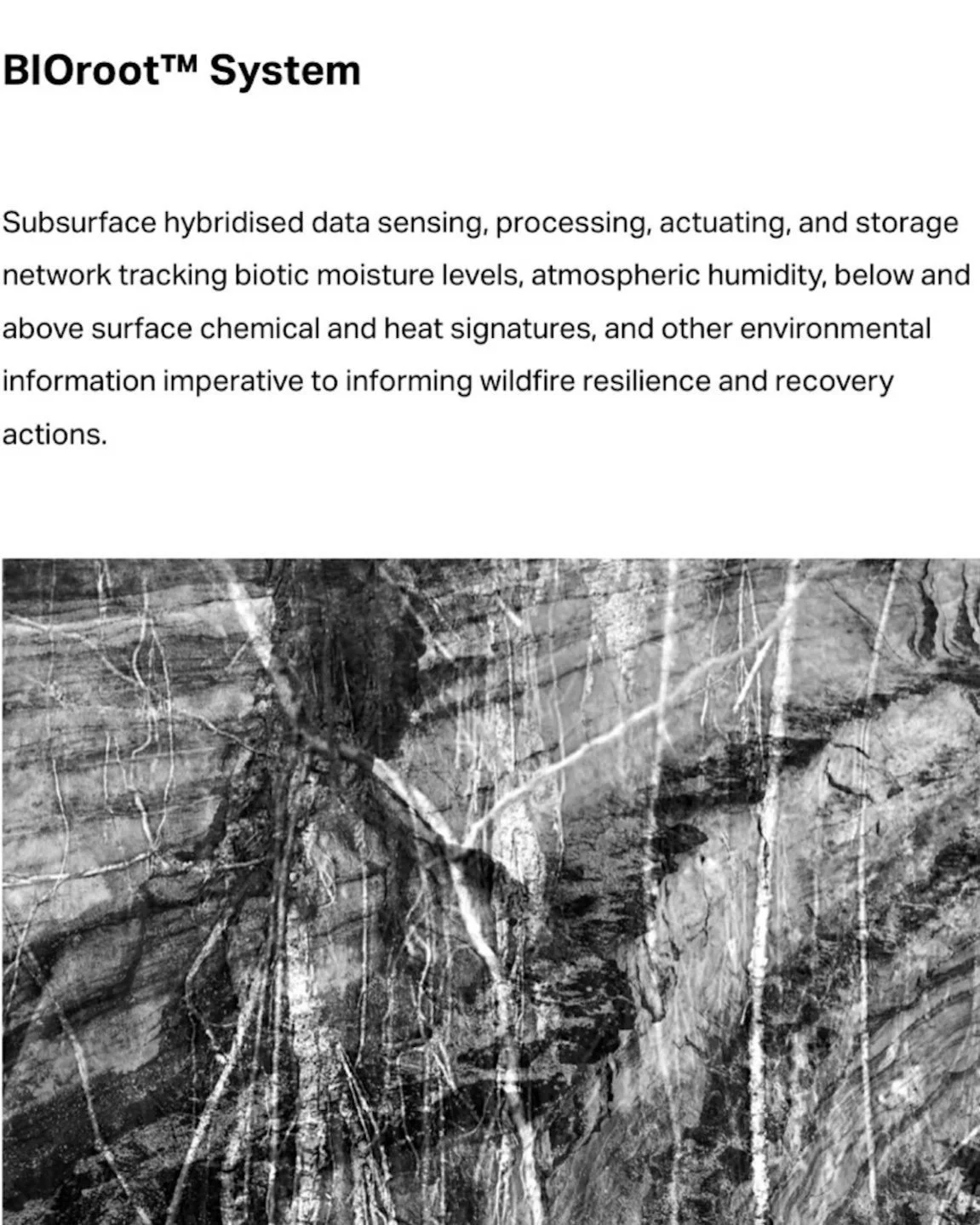
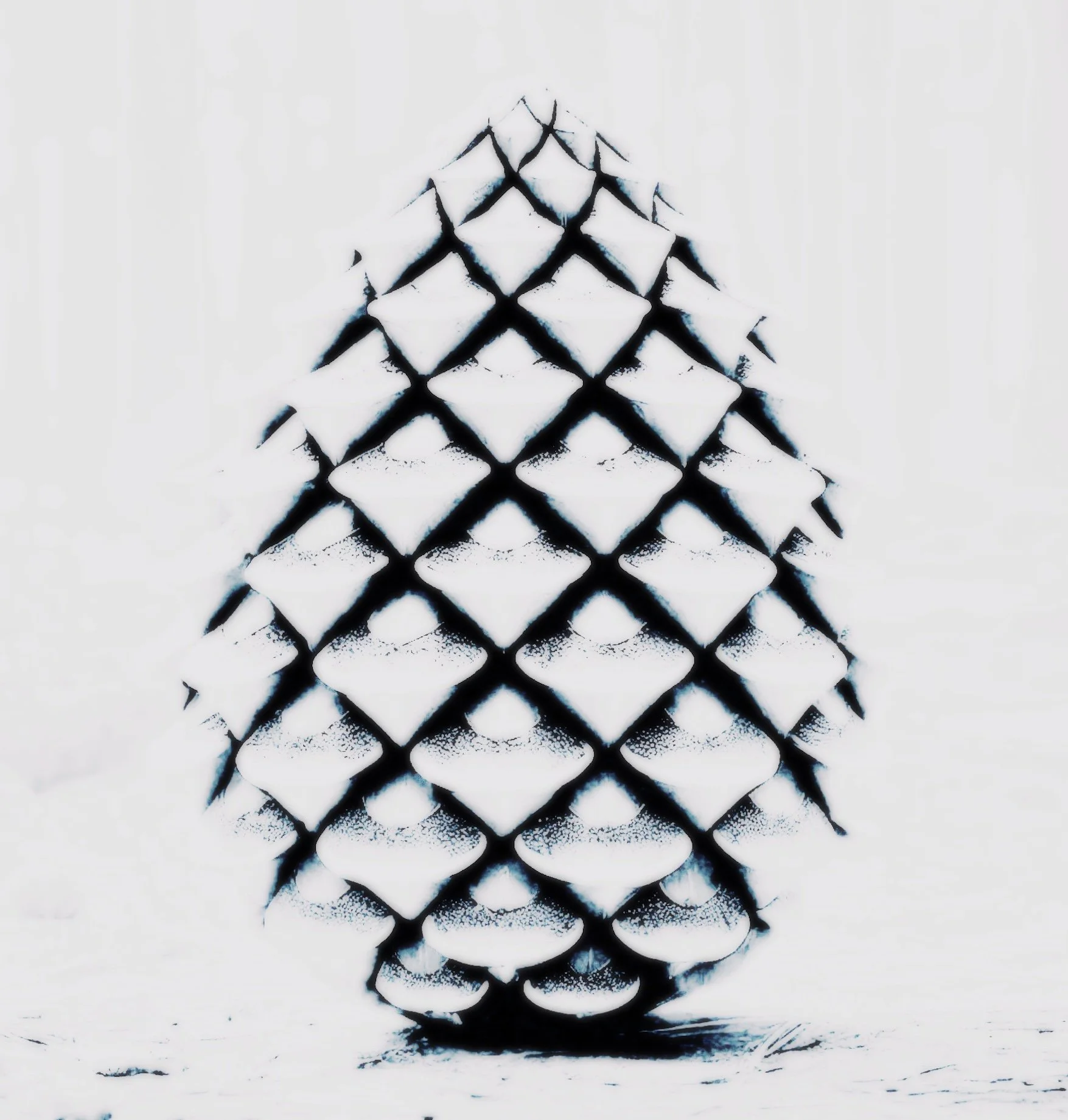
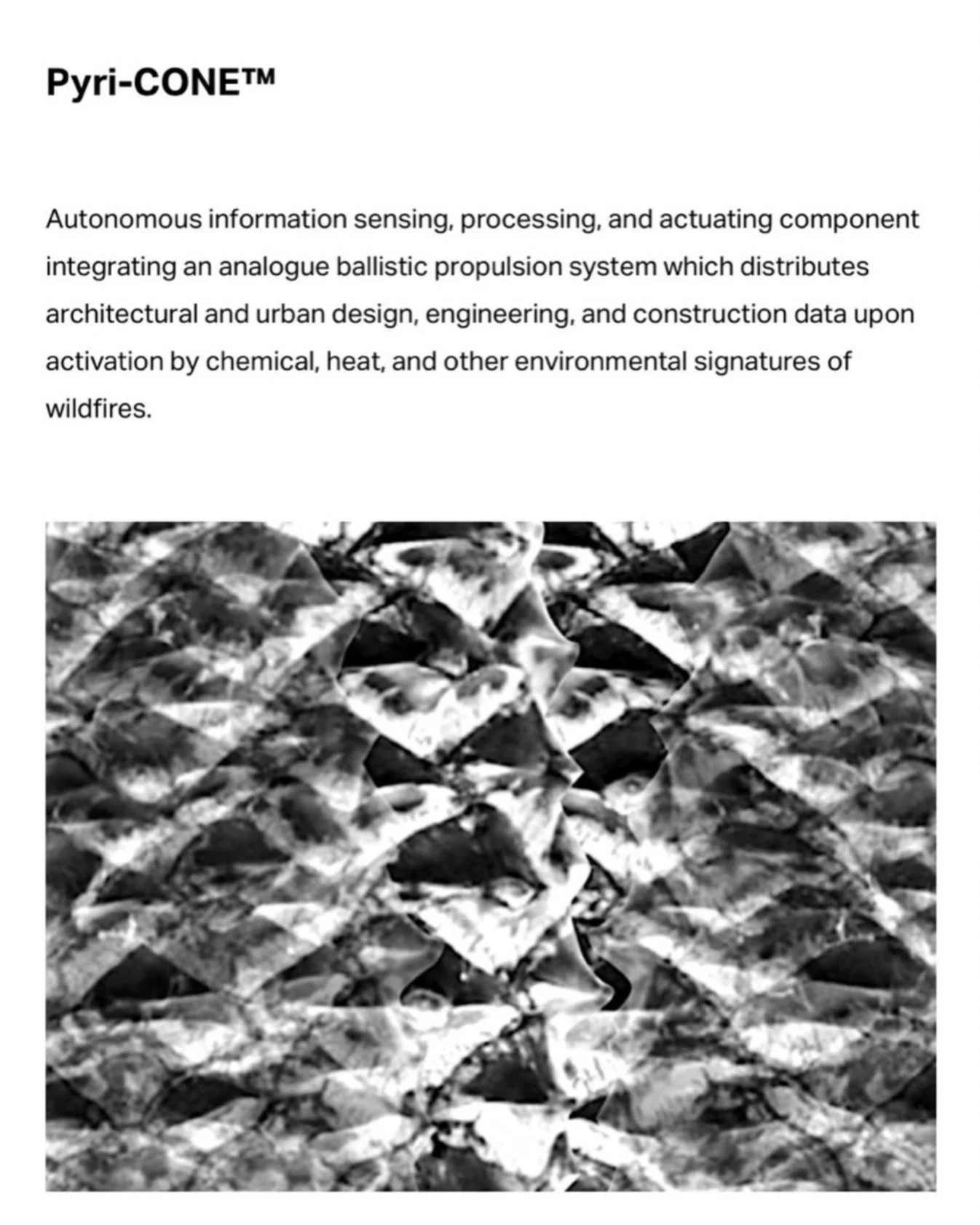
Images: [Top/Bottom/Storyboard] sketches of early iterations of Dr. Sterry’s biomimetic fire retardant smart exterior cladding system Retardant BIObark™; [Storyboard] sketches of early iterations of Dr. Sterry’s seminal bio-inspired wildfire sensing design concepts BIOroot System™ - a subterranean data sensing, processing, and storage network which mimics the root systems of pyrophytic trees, and Pyri-CONE™ - an autonomous wildfire sensing, processing, and actuating component, which modelled on serotinous pinecones, identifies the heat and chemical signatures of wildfires and disseminates environmental data to the (B)IOT™ - a biotechnological internet of things - through a ballistic action triggered by the melting of resins that hold its exterior parts together. Three of several design concepts that were published in Panarchistic Architecture (2018), and in several more recent publications, these unprecedented biotechnologies are designed to enable the creation of a smart wildland urban interface which enables resilience to wildfires through a real-time hybridised information communications technology network connected to biomimetic architecture, infrastructure, and utilities, inc. the electric grid and water supplies. Learn more about the concepts and the codes that govern them in the codex here and the conclusions of her PhD thesis here.


Images © Melissa Sterry All Rights Reserved
