Encoding the Future
Could tomorrow’s architecture be stored in living matter?
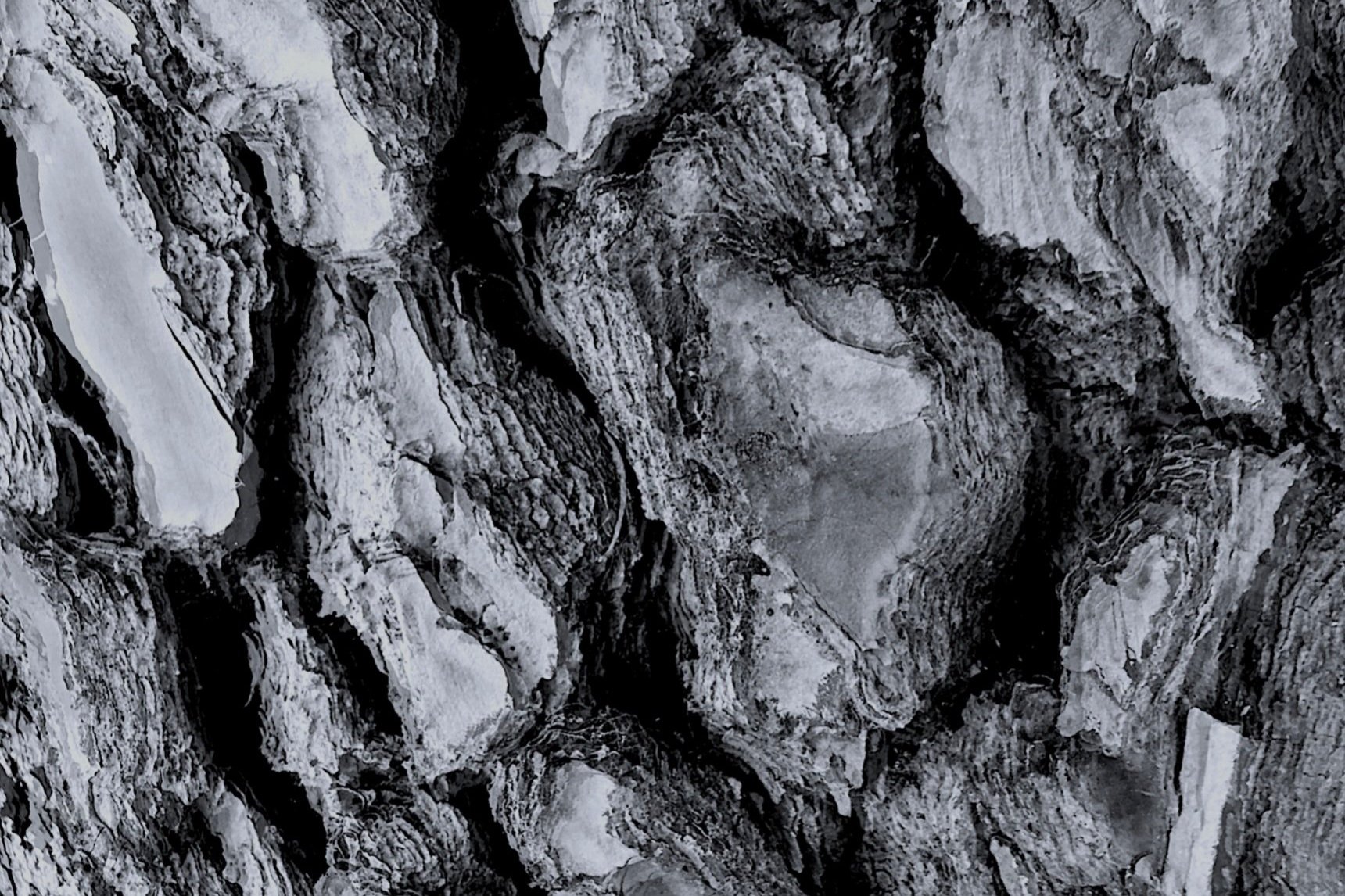
Image: Dr. Sterry’s seminal concept Retardant BIObark™ - a bio-inspired wildfire resilience exterior cladding system, from Panarchistic Architecture, 2018.
Harnessing DNA, Biofabrication, and Material Innovation for Resilient Cities
As the digital age accelerates, so too does the demand for data storage — an ever-expanding ocean of information projected to surpass global silicon supply within decades. Amidst this impending scarcity, researchers are turning to DNA as a revolutionary medium for data encoding. Capable of preserving vast quantities of information in minuscule volumes, DNA storage offers unparalleled longevity, energy efficiency, and resilience to environmental hazards. Microsoft Research has demonstrated its feasibility by successfully storing and retrieving digital archives in synthetic DNA, prompting a paradigm shift in data architecture.
Yet the implications extend far beyond computation. Chapter 7.1 of Panarchistic Architecture (2018) explores the intersection of biological storage, material innovation, and wildfire-adaptive design. The fire-resilient traits of species such as Pinus contorta and Quercus chrysolepis inform a new architectural ethos — one that prioritises regenerative materials and cyclic renewal. Biofabrication, in-situ recycling, and fire-integrated construction techniques signal a transition from passive resistance to active adaptation. Could future cities encode their blueprints within living matter, designed to rise anew from fire’s aftermath?
From pyro-responsive structures to biologically embedded data, this chapter probes the potential of architecture to mirror ecological cycles. In an era of intensifying climate volatility, will our built environments learn to evolve, persist, and even thrive in the wake of disaster? The answers lie at the frontier of biotechnology, computation, and fire-adaptive design.
Extract
Smoke Signals: Pyrophilic Sensing, Signalling and Symbiogenesis
Reverting to the Panarchistic design, thinking, and policy brief, ways in which the above referenced sensing, actuating, analysis, data storage, networking, and material developments may enable architecture as cyclic biochemical process of material & information exchange, which, built to burn, recurrently rises from its ashes, but, upon doing so, evolves with each phoenix-like incarnation, include:
Resprouting
Transitioning towards biological data storage of architectural ‘DNA’, interim technologies, such as those cited above, could store all such data as is required to ‘clone’ architectural and urban assemblages [i.e. specifications and blueprints]. Whereas replication of hazard-vulnerable architectures has grave social and environmental consequences, whereupon, like endurer species [i.e. Populus tremuloides], material, structural, morphological and other traits enable persistence in fire-prone regions, the inverse applies.
Pyriscence
Environmental sensing, actuating, analysis, and networking technologies, biological and otherwise, now facilitating real-time local, regional, and global monitoring of both cyclic and sporadic planetary processes, and the body of architectural experiments in environmentally-adaptive material morphologies fast growing, the foundations for wildfire as regenerative urban catalyst are laid. Ways in which the field may advance include interrogation of the potentialities for heat-triggered structural transitions, such as those that occur when the resins in the cones of fire-adapted Pinus species [i.e. Pinus contorta] melt. Ways in which mimicry of said process may activate architectural ‘reproduction’ include the release of fabrication agents [i.e. self-organising biological materials]; of both locally and remotely stored data as may be used for purposes including construction, production of furniture and other household goods, and insurance claims; of emergency supplies [i.e. food, water, and medicine]; and of notifications to family, friends, peers, and colleagues of the loss of property, thus need of assistance [i.e. accommodation, emotional support, etc.] Upon reproduction of homes and their contents, as/where applicable, this process allows for evolution [i.e. specification upgrades].
Pyrogermination
As with pyriscence, the process of pyrogermination could be enabled through transference of existing and emerging sensing, actuating, analysis, and networking technologies, biological and otherwise. However, whereas, pyriscence is a heat-activated hybrid biochemical-mechanical process [i.e. changes in the former trigger response in the latter], pyrogermination relies wholly on receipt of chemical signatures, thus data, and in some instances, technologies as facilitate the acquisition and analysis thereof, would be different to that of pyriscence. As in fire-adapted species [i.e. Pinus attenuata], pyriscence and pyrogermination would be symbiotic, wherein their means of enabling architectural and urban reproduction would be not mutually exclusive.
Read ‘Panta Rhei Meets Permutation: Calculation, Codes, and Codification for External States of Flux and Fire’ in full here.