Chips to Cells
Biocircuits and Biological Coding
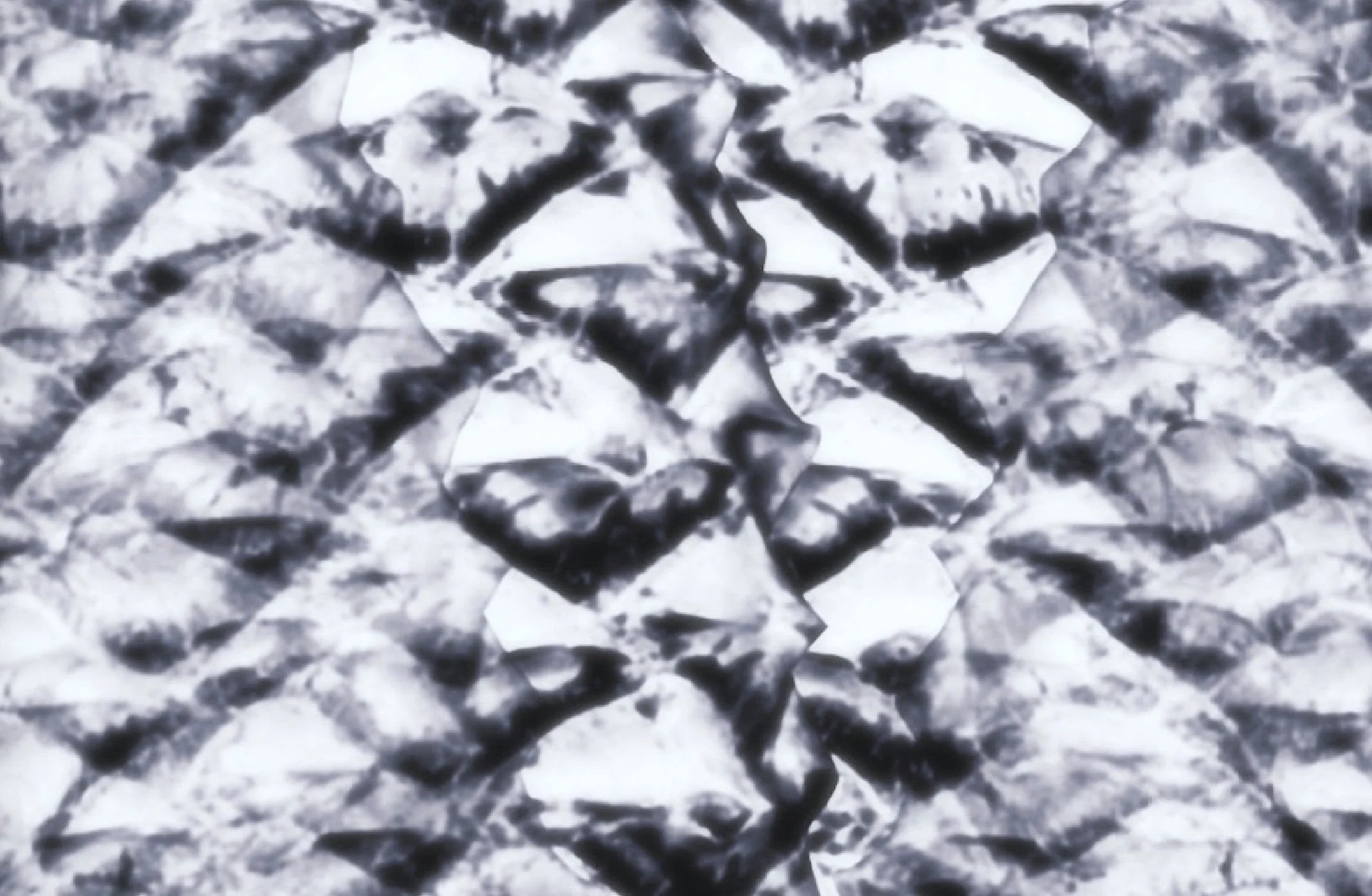
Image: Early surface exploration for seminal biomimetic wildfire sensing concept Pyri-CONE™, which inspired by serotinous cones that are native to California, was first described in Panarchistic Architecture (2018). The device, of which the name was coined from pyriscence - the scientific term that is used to describe seed release that has been triggered by wildfire - autonomously senses and processes environmental data using a combination of biochemical and ballistic (mechanical) processes that mimic those of the pinecones that inspired it. One of several unprecendented design concepts developed during the first-in-kind PhD research programme, this environmental sensor functions in an essentially passive way, in that it does not require an energy source, as it is instead activated by the melting of resins that hold its external parts together. This process - shown here in a still from an animated visualisation that conveys the material state change that takes place in response to the radiative heat from fire - then triggers the ballistic action that sends a signal to the biotechnological IOT network of which it is part. Like other components of the (B)IOT™, it enables real-time data to migrate across an ecologically smart environment network designed to enhance both wildfire resilience and recovery in the wildland-urban-interface.
How Nature’s Networks Could Reshape Data, Design, and Disaster Resilience
As part of a series making my scientific research more accessible, this AI-generated translation of part II of Codification for Eternal States of Flow, Flux, and Fire (2018) replaces specialist terminology with language accessible to non-specialists interested in wildfire resilience and adaptive urban design.
With data demands accelerating at an unprecedented pace, traditional digital storage solutions are reaching their limits. Conventional microchip-based systems, reliant on finite resources and vulnerable to environmental degradation, struggle to keep pace with the exponential growth of information. In my thesis and subsequent works, I proposed an alternative — one that transcends hardware limitations by harnessing nature’s most efficient data storage system: DNA.
Rather than perpetuating unsustainable computing models, this vision embraces bio-inspired storage and processing, where data is not only written into biological molecules but also structured to evolve and self-repair. Just as living organisms encode and transmit genetic information with remarkable density and longevity, future data systems could use synthetic DNA to store vast digital archives in microscopic volumes, offering durability far beyond conventional storage media.
This approach extends beyond data storage, reshaping how architecture and urban design interact with environmental challenges. Drawing inspiration from regenerative biological systems, bio-integrated materials and self-healing structures offer a glimpse into a future where buildings adapt to fire and climate threats, rather than resisting them. Fire-responsive materials, inspired by seed dispersal and natural growth cycles, could enable cities to regenerate post-disaster, shifting design paradigms from static resilience to dynamic adaptation.
By moving beyond rigid computational and structural models, this framework redefines the role of technology in urban resilience. As biocomputing and ecological design converge, the cities of tomorrow could embody living, intelligent systems — where storage, architecture, and the environment evolve in perpetual synchrony, fostering a world not only designed to survive but to thrive.
Extract
“Environment Responsive Architecture
Nature’s efficiency doesn’t stop at DNA storage. Plants and animals have spent millions of years evolving ways to survive harsh environments. This resilience can inspire how we design buildings, materials, and even cities to withstand challenges like wildfires and climate change. One striking example is fire-adapted species such as certain pine trees. Their cones, sealed with resin, only release seeds when exposed to heat, ensuring regeneration after a wildfire.
Imagine if our homes and cities could do the same: withstand destruction and emerge stronger. This concept is central to Panarchistic design — an approach that embraces cyclical processes of growth, destruction, and renewal. Buildings designed with this philosophy could use materials that respond to environmental changes, store critical data in their structural DNA, and even “regenerate” after disasters.
Regenerative Materials
Modern technology already offers glimpses of what such adaptive materials might look like. Biofabricated materials, cultivated from living organisms like fungi and bacteria, could replace synthetic, non-biodegradable options. When exposed to fire, these materials would decompose into harmless components, nourishing the soil and encouraging ecological recovery. Projects like Jessica Gregory’s BiHome and the Urban Morphogenesis Lab demonstrate the potential of such biofabrication.
On-site recycling is another transformative idea. Instead of clearing debris after a disaster, imagine using it as raw material for rebuilding. Techniques like 3D printing and modular design make it possible to reuse everything from timber to pine needles. For example, designer Tamara Orjola transforms pine needles into textiles, showing how even the smallest materials can have a second life.
Some innovations embrace fire itself as part of the process. Artists like Cai Guo-Qiang use controlled explosions to shape their creations, while architects explore the effects of burning on material strength and texture. These experiments point to a future where fire isn’t just a destructive force but a tool for transformation.”
Read the article ‘Beyond Cloud Computing: the age of biological storage’ in full here.