
Beyond Cloud Computing: the age of biological storage
How the Next Generation of Data Will Be Stored, Processed, and Grown
An AI generated translation of Dr. Melissa Sterry’s Codification for Eternal States of Flow, Flux, and Fire’ Part II (2018) for the general reader.
Biological Hard Drives
Imagine storing the world’s vast oceans of digital data in something as small as a drop of water. As our appetite for data grows — with global storage demands reaching unfathomable scales — we face the challenge of finding space for it all. Current estimates suggest that by 2040, our need for microchip-grade silicon could outstrip supply by 10 to 100 times. Hard disks — vulnerable to wear, natural disasters, and finite lifespans — may no longer suffice. Enter an unexpected saviour: DNA.
DNA is nature’s most compact data storage system. A single human genome fits inside a cell too tiny to see, and theoretically, one cubic millimetre of DNA could store a billion gigabytes of data. To put that into perspective, the entire world’s storage needs could be met with about a kilogram of DNA. These astonishing facts have inspired researchers to envision a future where biomolecules replace traditional microchips as the backbone of data storage.
The idea isn’t new. Back in 1988, artists and scientists collaborated to encode the first digital message into DNA. The project, called Microvenus, stored an 18-base pair message symbolizing life and the Earth. Since then, advancements have been breathtaking. Microsoft Research has stored the Universal Declaration of Human Rights, a vast library of books, and even a seed databank in DNA, demonstrating error-free data retrieval. DNA not only offers space efficiency but also remarkable durability — potentially lasting for centuries if frozen or even longer in living tissue. Could the storage device of the future be as small and enduring as a seed?
Environment Responsive Architecture
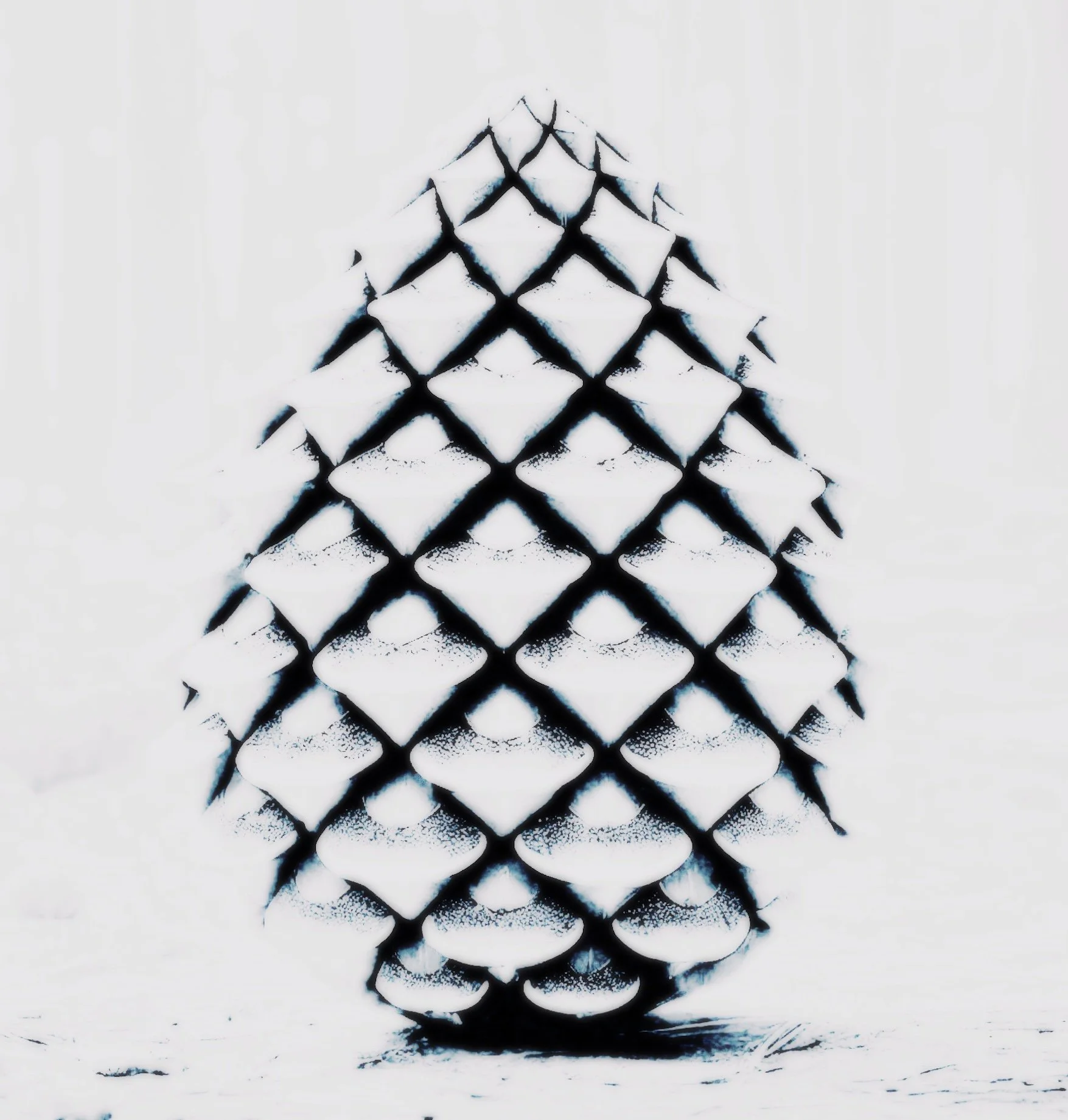
Nature’s efficiency doesn’t stop at DNA storage. Plants and animals have spent millions of years evolving ways to survive harsh environments. This resilience can inspire how we design buildings, materials, and even cities to withstand challenges like wildfires and climate change. One striking example is fire-adapted species such as certain pine trees. Their cones, sealed with resin, only release seeds when exposed to heat, ensuring regeneration after a wildfire.
Imagine if our homes and cities could do the same: withstand destruction and emerge stronger. This concept is central to Panarchistic design — an approach that embraces cyclical processes of growth, destruction, and renewal. Buildings designed with this philosophy could use materials that respond to environmental changes, store critical data in their structural DNA, and even “regenerate” after disasters.
Regenerative Materials
Modern technology already offers glimpses of what such adaptive materials might look like. Biofabricated materials, cultivated from living organisms like fungi and bacteria, could replace synthetic, non-biodegradable options. When exposed to fire, these materials would decompose into harmless components, nourishing the soil and encouraging ecological recovery. Projects like Jessica Gregory’s BiHome and the Urban Morphogenesis Lab demonstrate the potential of such biofabrication.
On-site recycling is another transformative idea. Instead of clearing debris after a disaster, imagine using it as raw material for rebuilding. Techniques like 3D printing and modular design make it possible to reuse everything from timber to pine needles. For example, designer Tamara Orjola transforms pine needles into textiles, showing how even the smallest materials can have a second life.
Some innovations embrace fire itself as part of the process. Artists like Cai Guo-Qiang use controlled explosions to shape their creations, while architects explore the effects of burning on material strength and texture. These experiments point to a future where fire isn’t just a destructive force but a tool for transformation.
Living Architecture and Ecological Design
What if buildings weren’t just structures but living organisms? This vision is closer than you might think. Architects and designers are experimenting with “grown” structures, such as Giuliano Mauri’s tree cathedral and Full Grown’s furniture made from cultivated trees. These creations not only integrate seamlessly with their environments but also exemplify sustainability by eliminating waste.
The shift towards natural materials extends to fire-retardant designs. Traditional fireproofing methods often rely on toxic chemicals, which can harm both people and the planet. Researchers are now developing bio-based fire retardants that reduce flammability without releasing harmful pollutants. These innovations align with the principles of “passive survivability,” ensuring that buildings can withstand disasters without endangering their surroundings.
Wildfire as Renewal Catalyst
To truly harmonise with nature, our designs must embrace cycles of growth, decay, and renewal. This mindset, inspired by landscape urbanism, treats cities as dynamic ecosystems. By learning from processes like seed dispersal, fire-triggered germination, and even seasonal shedding, we can create structures that adapt to their environments.
For example, buildings could mimic fire-adapted trees by shedding flammable components when wildfire risk rises. Advanced sensors and materials could enable these structures to respond in real-time, releasing emergency supplies or transmitting data about the disaster. Over time, these buildings could “evolve” through upgrades, much like species adapt to environmental changes.
Design for (Creative) Destruction
The idea of “designing for destruction” might sound counterintuitive, but it’s deeply rooted in nature. Many fire-adapted species invest significant resources in protecting their genetic information, ensuring that they can regenerate after a blaze. Similarly, buildings designed to “fail gracefully” could reduce harm during disasters and facilitate recovery.
Take, for example, the concept of architectural abscission. Inspired by trees that shed branches to prevent fire from spreading, buildings could release external features like plant-covered trellises or even sections of their structure in response to heat. This approach minimizes damage while preserving the core of the building.
Regenerative Design Futures
As we rethink our relationship with materials, energy, and the environment, it becomes clear that the future of design lies in blending technology with biology. From DNA data storage to living architecture, the possibilities are as boundless as nature’s imagination. By embracing these innovations, we can create systems that not only withstand the challenges of the modern world but also contribute to its regeneration.
Find some earlier examples of Dr. Sterry’s explorations of ecologically smart cities here and read the the chapter from which this article was generated here.
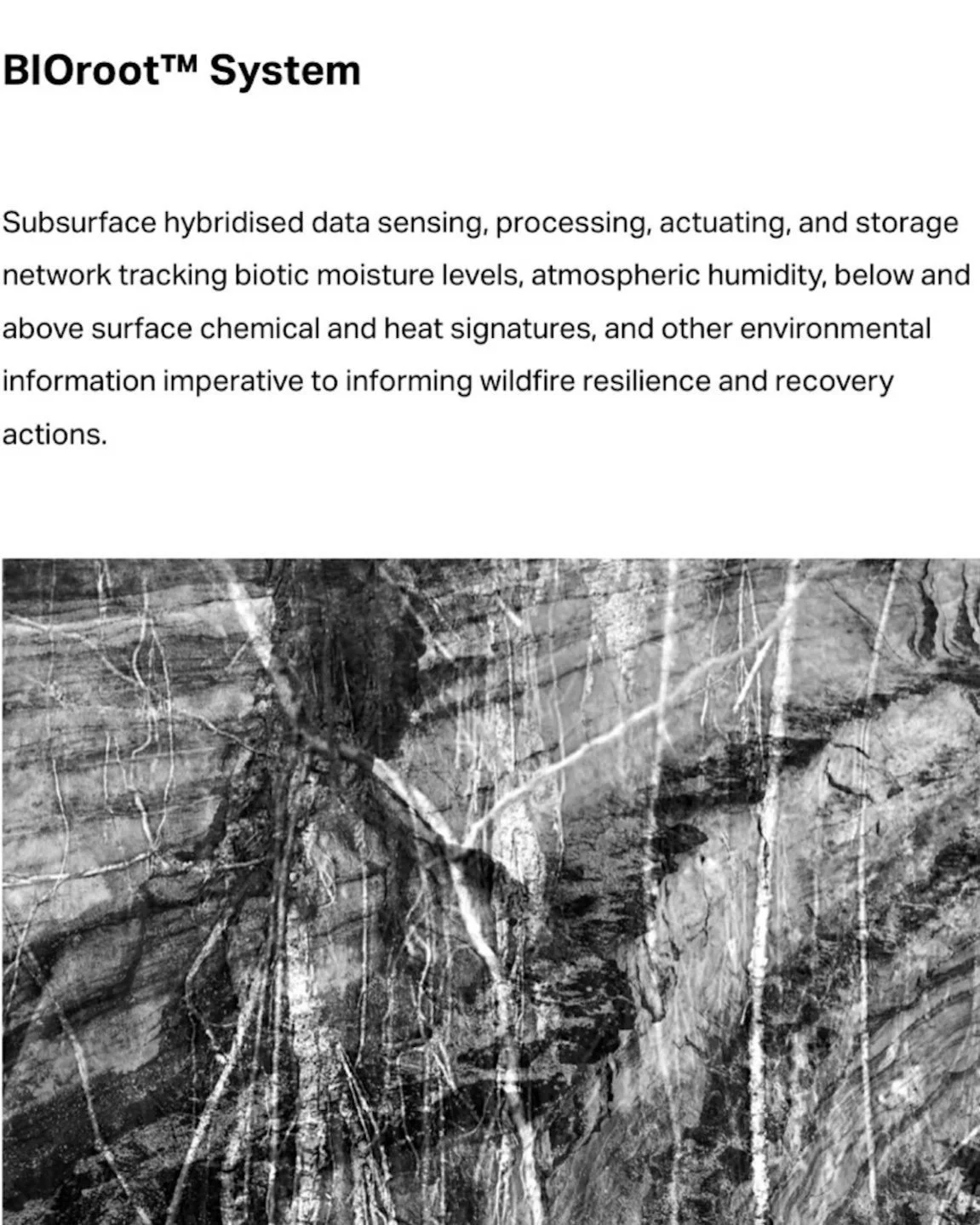
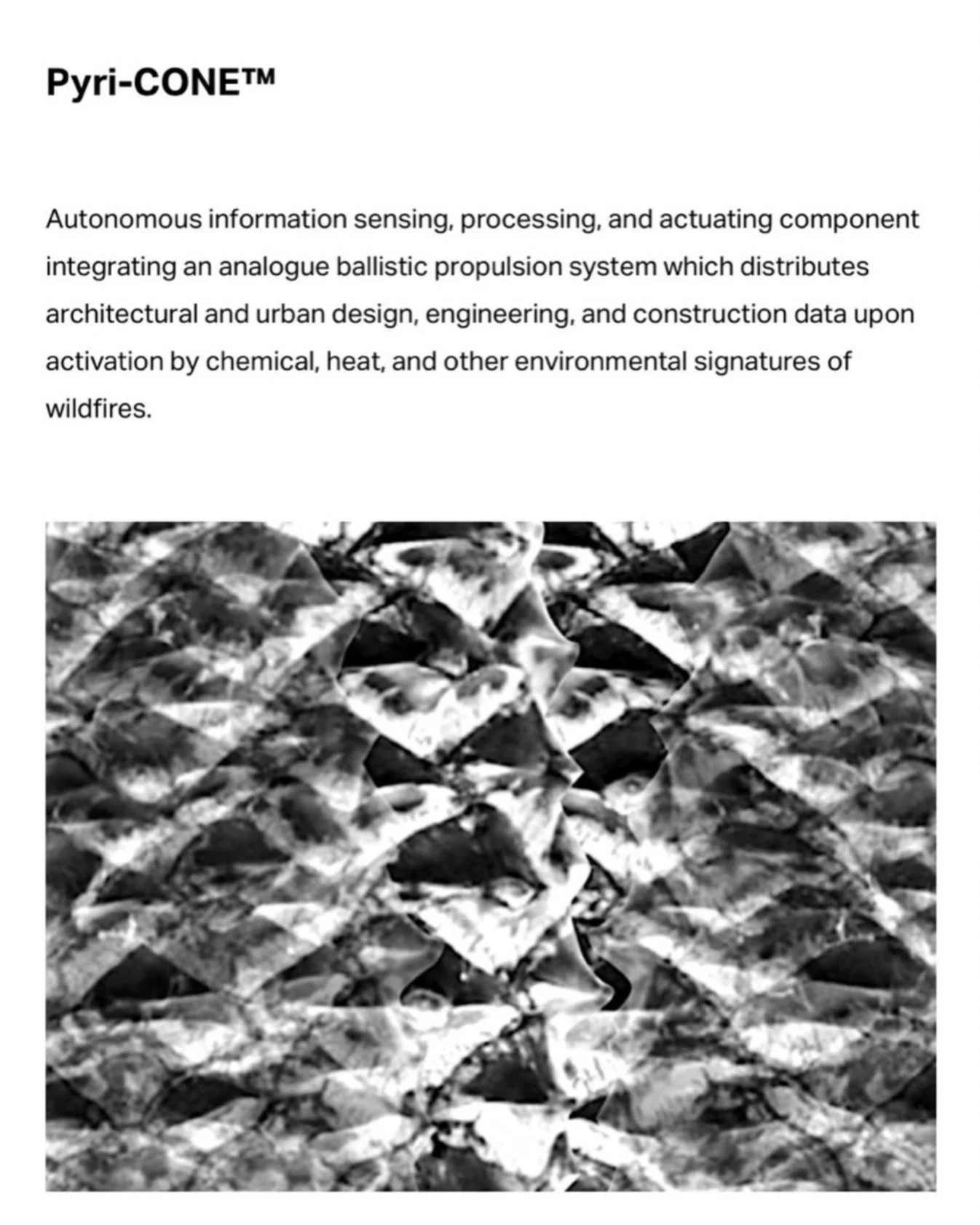
Images: [Top/Bottom/Storyboard] sketches of early iterations of Dr. Sterry’s biomimetic fire retardant smart exterior cladding system Retardant BIObark™; [Storyboard] sketches of early iterations of Dr. Sterry’s seminal bio-inspired wildfire sensing design concepts BIOroot System™ - a subterranean data sensing, processing, and storage network which mimics the root systems of pyrophytic trees, and Pyri-CONE™ - an autonomous wildfire sensing, processing, and actuating component, which modelled on serotinous pinecones, identifies the heat and chemical signatures of wildfires and disseminates environmental data to the (B)IOT™ - a biotechnological internet of things - through a ballistic action triggered by the melting of resins that hold its exterior parts together. Three of several design concepts that were published in Panarchistic Architecture (2018), and in several more recent publications, these unprecedented biotechnologies are designed to enable the creation of a smart wildland urban interface which enables resilience to wildfires through a real-time hybridised information communications technology network connected to biomimetic architecture, infrastructure, and utilities, inc. the electric grid and water supplies. Learn more about the concepts and the codes that govern them in the codex here and the conclusions of her PhD thesis here.


Images © Melissa Sterry All Rights Reserved
