field notes #1
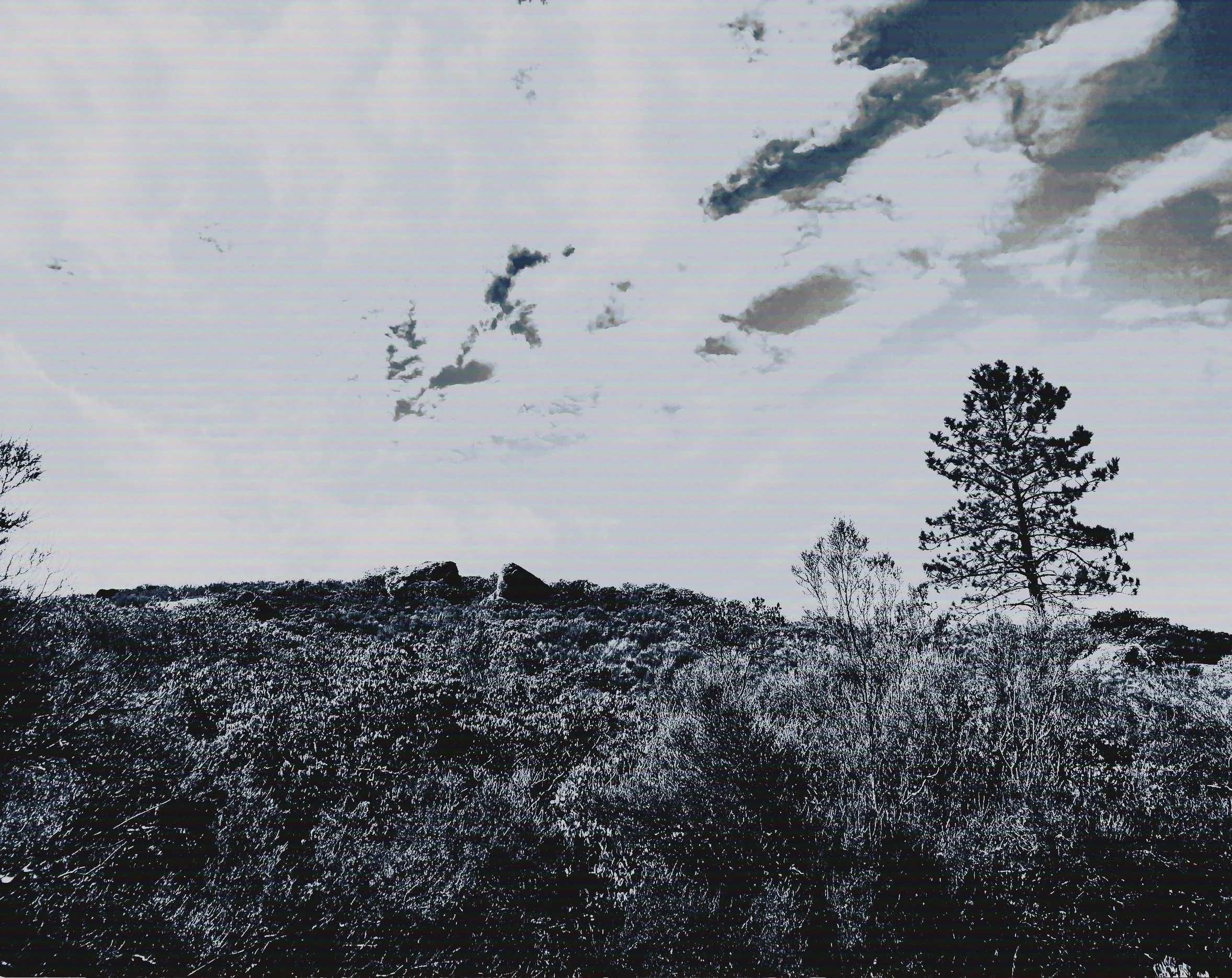
“We must consider the distinctive characters and the general nature of plants from the point of view of their morphology, heir behaviour under external conditions, their mode of generation, and the whole course of their life”. Theophrastus, Enquiry into Plants.
Theophrastus and the Origins of Field Studies
From the ‘Father of Botany’ onwards, Theophrastus (c.372-288 BC), natural philosophers - today better known as scientists - have understood that to truly comprehend the non-human world, we must undertake in natura studies - a concept that’s today better known as ‘field studies’.
Family [tree] Roots
I first visited California in 1997 during a tour of the southwestern United States. My hosts for the trip were my maternal family, the late great Charlie Long and his wife Patty. The former, like many members of my maternal lineage, had a very pragmatic mind. Read through the records of our ancestors dating back to the 1500s and one finds numerous individuals whose careers involved working out complex, yet practical problems, from my great grandfather, who was the master builder of one of the largest aqueducts in Southern England - an aqueduct that was built when its predecessor failed, despite having been designed by Britain’s most famous civil engineer, Isambard Kingdom Brunel - to umpteen mining engineers and miners more generally, of whom many were part of the diaspora out of Redruth and wider Cornwall in the 19th century and to California, wider Western United States, South Africa, Australia, Chile, and more places with ‘gold in them there hills’.
Like our predecessors, Charlie was adept at working out an array of engineering issues. He used that talent to work out the technicalities of grading roads, laying building foundations, and implementing utilities in often challenging terrains in the hills of San Diego County. However, his expertise didn’t end there. Having grown up in a place where wildfires are native, he’d learned a lot about their behaviour. His knowledge fused both his own hands-on experience of dealing with the challenge and that which had been imparted to him from his friends and peers, including members of the Native American community of whom the ancestors have lived with wildfires for millennia.
A few years prior to that visit, I had already begun exploring biomaterials and biodesign, conceiving the world’s first circular fashion collection — before the term ‘circular design’ had even been coined. Though yet to graduate from my Bachelors design degree, I realised it would be many years before the fashion industry would take so much as a passing interest in the likes of compostable apparel as a way to help mitigate the growing issue of waste to landfill. Nonetheless, it was during that time - some three decades ago - that the seeds of my future research had already been planted.
Learning from the Land and Local Knowledge
While much of that inaugural visit was consumed by an extensive tour encompassing swathes of California, Arizona, and Nevada, the rest had been spent in and around the family home just outside the historic town of Julian. During that time I’d learned about some of the extraordinary native plants, of which some I had collected samples, including a Coulter pine specimen - as seen on the homepage - which is larger than the one on display at Natural History Museum in London, and with it, all other natural history museums I have so far visited, including the Natural History Museum of Los Angeles County. My hosts had kindly imparted all manner of local knowledge, including insights about wildfires and living at the interface of wildlands more generally, such as how to avoid getting stung, bitten, or otherwise injured or killed by the many local ‘critters’ as they called them. The knowledge they imparted was invaluable and timeless in its application - as relevant today or tomorrow as it was a century or more ago. Having lived in and with the likes of wildfires and potentially dangerous creatures including venomous snakes, spiders, scorpions, and more, they, like many within their community, know and understand them in a way that no amount of reading can ever replicate.
A Firsthand Account of the 2003 Cedar Fire
In late October 2003, the hills of San Diego Country hit the global news channels as the fiercest wildfire on modern record ripped through the region. Tuning into the television, from across The Atlantic, my family and I watched forests ablaze with flames towering tens of feet above the canopy. Never before had I seen scenes like that, not even when the Yellowstone fires had happened in 1988. Looking at the map and the wind direction, we realised the wildfires were on a direct path towards Julian, and called cousin Charlie to get an update. Having evacuated the rest of the family, he and his neighbour were preparing to defend their homes against the fires. They had already created firebreaks, rigged water pumps, and formulated a last-resort plan: if all else failed, they would take refuge in a lake on his property. Their preparedness paid off — their homes survived while many others were lost. In some parts of the Global North this level of direct action and bravery is rare, but, among the communities native to places like the hills of San Diego county, it’s par for the course.
Merging Design, Science, and Sustainability
By 2011, my career had expanded beyond fashion into sustainable innovation. In the early 2000s, I had founded one of the world’s first sustainability think tanks and consultancies, focusing on the intersection of design, arts, and media. Earlier still, in 2009, I’d co-founded a sustainable design initiative which, engaging 30 experts across the field, and supported by a few dozen partners, including several leading professional bodies, together with universities, and civic institutions, was concerned with educating companies in the built environment on frontier developments in the field. Through that endeavour it became clear that there was finally enough traction to return to the problem of finding solutions to human design problems through the study of living organisms and the ecosystems they form.
In 2010 I had started self-funded and designed a PhD programme to explore how mimicry of organisms that have evolved to live with natural hazards could inform architectural and urban resilience. Initiated at University of Salford, I then migrated the PhD to University of Greenwich in 2011, soon after which I realised I would need to focus on one, not several natural hazards. But, which one?
Why Wildfire at the Wildland-Urban-Interface?
The decision to focus my PhD on the potential to build resilience to wildfires through the mimicry of biota that evolved to live with wildfires was born of three factors,
It became clear that there was a critical knowledge gap of and at a time when the problem of wildfires at the wildland urban interface was fast scaling in size, frequency, and complexity.
Fire has been integral to the evolution of humans physically, intellectually, and emotionally since the prior, even, to the advent of our species. Thus re-examining humanity’s with wildfire posed intellectually stimulating questions.
The insights I had gleaned during that first visit to San Diego County - in tandem with the fact that I had a family connection to the problem.
The draft of my thesis had included an anecdote that acknowledged the pivotal role of my late cousin Charlie in my choice of specialisation. Sadly, the contents of PhD theses restricted to empirical data and other sources of peer-reviewed information, I was asked to remove it, hence why it is missing from the final draft, as published in 2018.
The Irreplaceable Value of in Natura Studies
In the years since my first visit to San Diego County, many have been the methods that I have used to gain insight into fire ecology and issues of wildfire more generally, including readership of scientific papers, surveys, and other studies, reviews of copious data gathered from sensors of many and varied kind and spread across space, air, land, and sea, to interviews with foremost eminent experts worldwide, and more. Yet, none of these things have ever compensated for field and other on-site studies, and not least when seeking to understand how plants and other life forms co-exist with wildfires over space and time.
Now, as back in Theophrastus’ time, field observations are an invaluable research tool. Ocular visits alone can imbue copious information on species, their populations, and the relations of those populations to biotic (living) and abiotic (non-living) entities, assemblies, and events in their surroundings. Furthermore, in natura observations ensure that ideas in the abstract can be held up to reality, which when dealing with phenomenon as complex and as potentially dangerous as natural hazards is imperative. As I stated in my PhD, fire is not to be played with. Nor for that matter are other natural hazards, as lives, properties, livelihoods, and the integrity of ecosystems are among the many things that are on the line - the fire line. Furthermore, the impacts of these events are inter-related and cumulative.
Digitising Field Research - the New Herbariums
I had planned to head to San Diego County for another field trip in the year following the completion of my PhD, but events including the pandemic, among other things, put paid to that. But, thankfully, opportunity beckoned and in January and February of this year I was finally able to spend a few weeks at one in the same site that sparked - pun intended - inspiration all those many years ago.
Today, unlike in the early years of my career, scientific observations, notes, and the like are not typically scribed by hand. Instead, I create digital herbariums of both static and moving images, together with voice and text notes, which are initially stored in my smartphone and an extenal hard drive, before being migrated to my laptop among other devices. I no longer have to wait until I return home to do secondary research on specimens and other findings, and can instead instantly pull up information while still in the field. While my field research is not wholly digitised, a large amount is. For example, though I still collect physical specimens where necessary, and make some hand drawn sketches and notes, field most observations are in digital not analgue form. I have no doubt were the likes of Leonardo da Vinci, Robert Hooke, and Alexander von Humboldt here today, they too would also build electronic herbariums and other achives that take a largely virtual not physical form. And, they like me, would feel excited at the new and emerging technologies that are expanding how we interrogate the environment - be it near, or far, situated at one end of the light spectrum, or another, or something else entirely.
Today’s scientists have the benefit of having an array of technologies that are not only able to see that which is beyond the human senses to sense, but can be carried in a rucksack, or even in your hand. We can record things in two dimensions, three dimensions, and four. Perhaps as quantum computing evolves we might even expand to new dimensions in realms that science is yet to discern.
From Biome to Biome, and Beyond
During my latest stay San Diego County, I also had the opportunity to have a number of trips to other biome-types in the region, including those of the Anza-Borrego desert. Deserts already cover some 33% of Earth’s land surface and some climate trajectories suggest they will soon cover yet more. Having first examined desertification and other problems associated with deserts, including aridity and heat stress, during the early phases of my PhD programme, and through affiliated projects including Bionic City®, I decided it is time to revisit them. Thus, though my focus will remain on design for living with wildfire and affiliated hazards, in the coming years I will be extending my research to explore how we can live with aridity through the mimicry of desert plants and ecologies, and pursing field studies in the Anza-Borrego desert in May and June.
As with my field studies more generally, research from these two studies will be used to conceptualise and develop new material and information systems, craft new architectural and urban design constructs, and more generally inform the biomimetic and ecomimetic ideas I am working with.
Details of some of the developments will be shared in forthcoming keynotes, papers, and articles, and other works published here on Panarchic Codex®, among other places.
Image: Chaparral, taken during ocular site visit in January 2024.